Director Alfie Barker on Bringing Leeds to the Screen – Interview
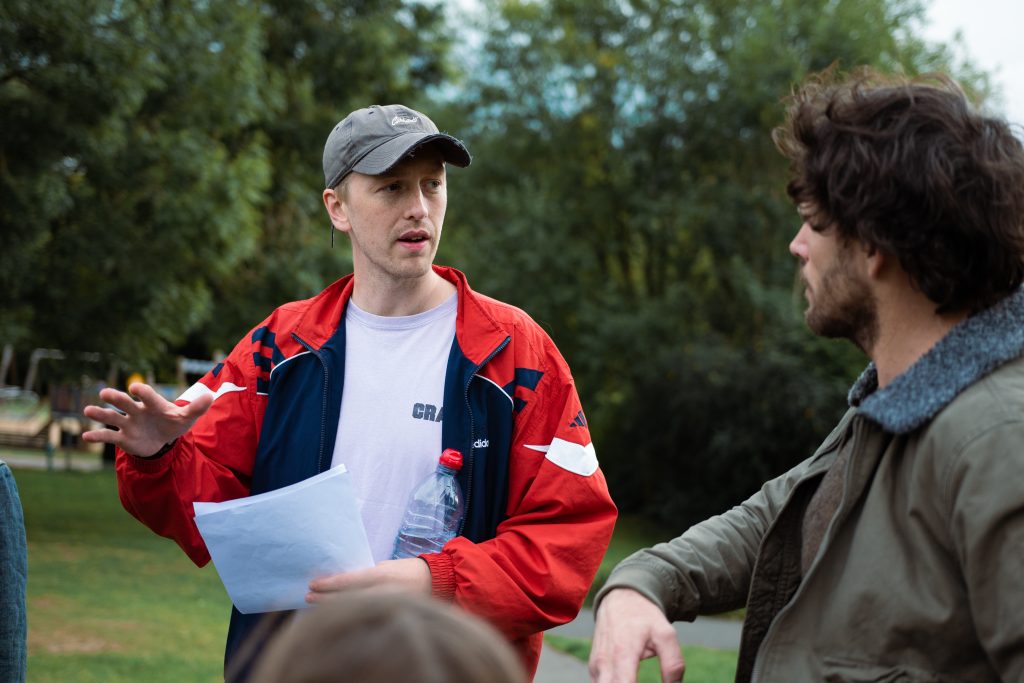
Image Credit: Anastasia A Arsentyeva
Alfie Barker is a Leeds-born and based writer-director whose work shines a light on overlooked stories, often rooted in themes of community and belonging. In recent years, he has seen growing success with his short films, winning Best British Short at BFI London Film Festival and UK Audience Award at Encounters Film Festival for ‘Hanging On’, and Best British Short at Leeds International Film Festival 2023 for ‘Half Way’.
Ahead of this year’s LIFF (30 October – 16 November 2025), we caught up with Alfie to talk about filmmaking outside London, telling untold stories, and what inspires his work.
Let’s start at the beginning — how did you first get into film?
The spark came when I was around 8, during the Easter holidays. My mum signed me up for an animation workshop at Leeds Young Film Festival, run by Aardman. We made plasticine figures and used photos in a sequence to bring them to life. It was basic stop-motion, but it completely blew my mind.
After that, I was hooked. I grabbed any camera I could find and started making short films with my dog, neighbours, and family. At 16, I joined the BFI Film Academy, which was a game-changer. It helped me understand what it meant to be a director and from then on I knew this is what I wanted to do.
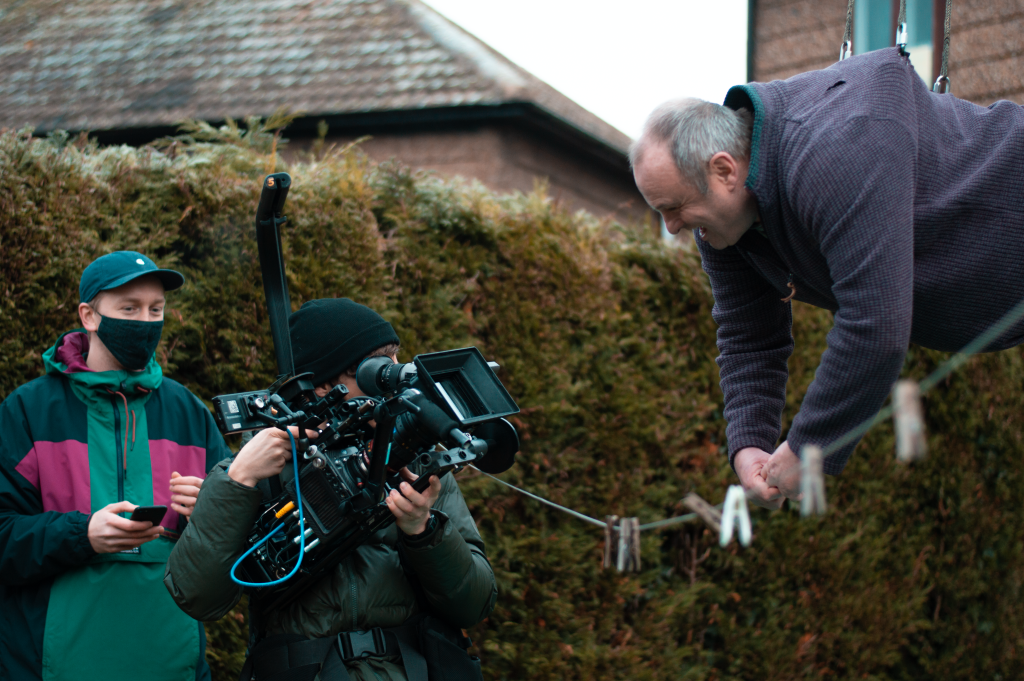
‘Hanging On’ shoot. Image Credit: Anastasia A Arsentyeva.
Can you tell me a bit more about your time at Leeds Young Film Festival, and how it shaped your path as a filmmaker?
After that first workshop, I kept returning and joined the young programmers group. We watched independent films from across Europe, often low-budget, creatively told stories for young audiences, and chose which to include in the programme. Looking back, that early exposure to diverse cinema shaped how I think about storytelling and making films that resonate. LYFF also ran short film competitions, which gave me the belief I could make something and see it on the big screen. That validation early on was hugely inspiring.
Has growing up in Leeds influenced the kinds of stories you want to tell?
Absolutely! I’ve spent most of my life in and around Leeds, so naturally it’s where most of my inspiration and characters come from. There aren’t many filmmakers telling stories about this city, so I felt maybe I should.
With ‘Hanging On’, I wanted to make a local documentary, and the Oulton estate story kept resurfacing. When the campaign to save it began to struggle, I wanted to help. A lot of the decisions were being made from elsewhere, far from the people affected, and being from the city, I felt a connection to the people and the injustice of it all.
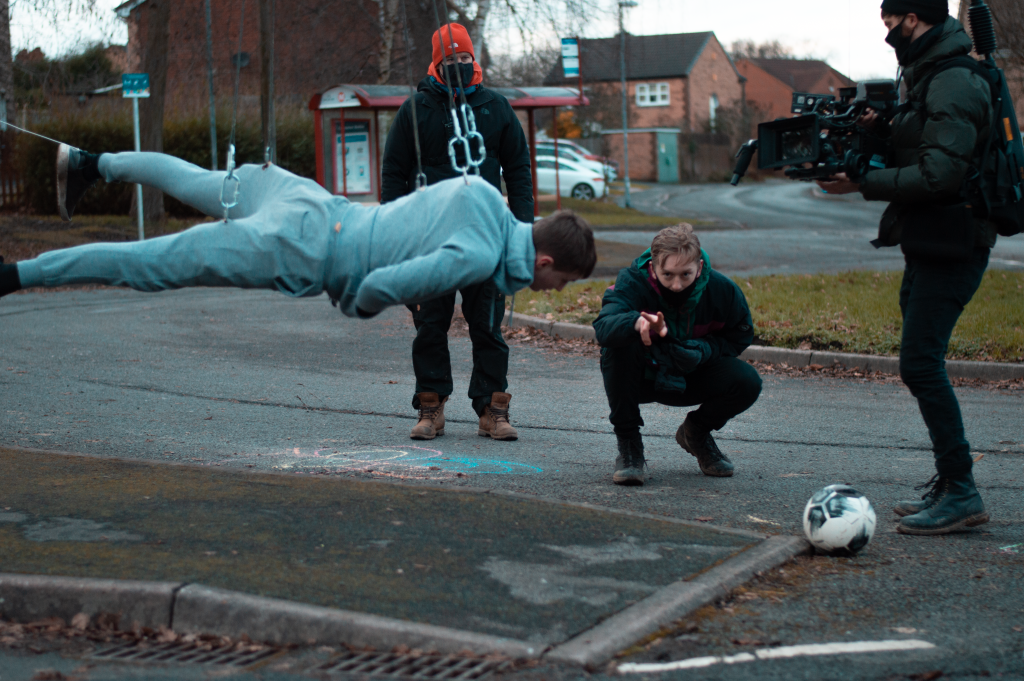
‘Hanging On’ shoot. Image Credit: Anastasia A Arsentyeva.
Your work often shines a light on social issues and community stories. ‘Hanging On’ explores a community faced with eviction, while ‘Half Way’ follows a woman rebuilding her life after prison. What draws you to these themes?
I’m drawn to people who are overlooked, on the fringes, battling systems or trying to fit into places that don’t quite accept them. I’m fascinated by community: what it means to belong, and what it feels like when you don’t. That’s what excites me creatively, trying to tell the stories that are right in front of us but often ignored.
You’ve worked across both documentary (‘Hanging On’) and fiction (‘Halfway’). Do you approach them differently?
The approach is different, though there’s overlap. ‘Hanging On’ was a controlled shoot because we had a clear vision for its experimental style. We recorded the audio interviews first, meaning they acted almost like a script, and we built the visuals around it.
‘Halfway’ was fiction, but rooted in real stories from documentary research. It was my first time working with so many characters, which was exciting but chaotic. We had a script, but it was a loose guide. For example, Sameena didn’t read it. We’d talk through each scene, give her an endpoint, and let her explore. That freedom brought a fluidness and playfulness I really value, even if it made editing harder because each take was different.
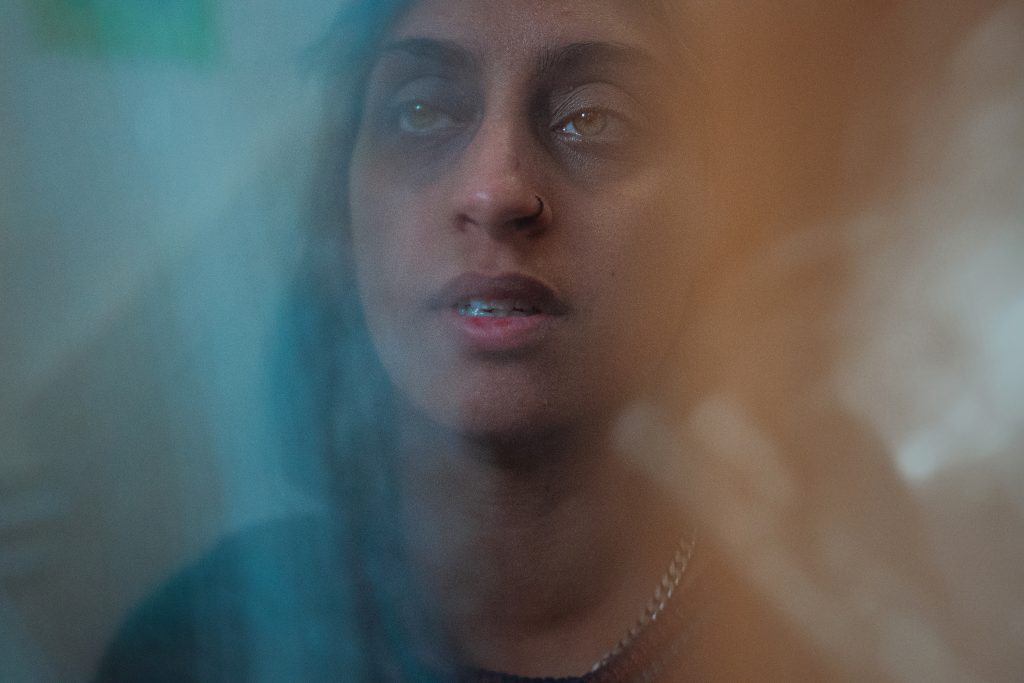
Sameena Jabeen Ahmed as Aminah in ‘Halfway’. Image Credit: Anastasia A Arsentyeva
You were selected for the prestigious TIFF Filmmaker Lab. How did that experience shape your current work?
It was incredible. I was still early in my career so came in extremely hungry; like a sponge soaking everything up. One major takeaway was a shift in how I approach writing. At TIFF, I realised it’s not just sitting at a desk. You can be brushing your teeth, walking, cleaning… and still be writing. It’s about directing your attention to the project in any form. Embracing movement as part of the process has helped me unlock some of my best creative ideas.
You’ve now won Best British Short at Leeds International Film Festival with ‘Half Way’. What did that recognition mean?
It was amazing, and we’re incredibly grateful. It’s helped people understand what I’m trying to say as a filmmaker, and what I bring to the table. But for me, the real prize is getting a film in front of an audience, on a cinema screen. That’s the thing you dream of as a film maker.
How do film festivals support emerging filmmakers, especially those working outside London?
LIFF is an incredible platform. The range and quality of films they programme makes it a rich experience. Watching global films and unheard voices is such an important part of growing as a filmmaker. Personally, I wouldn’t be where I am without the workshops and programmes they ran all those years ago.
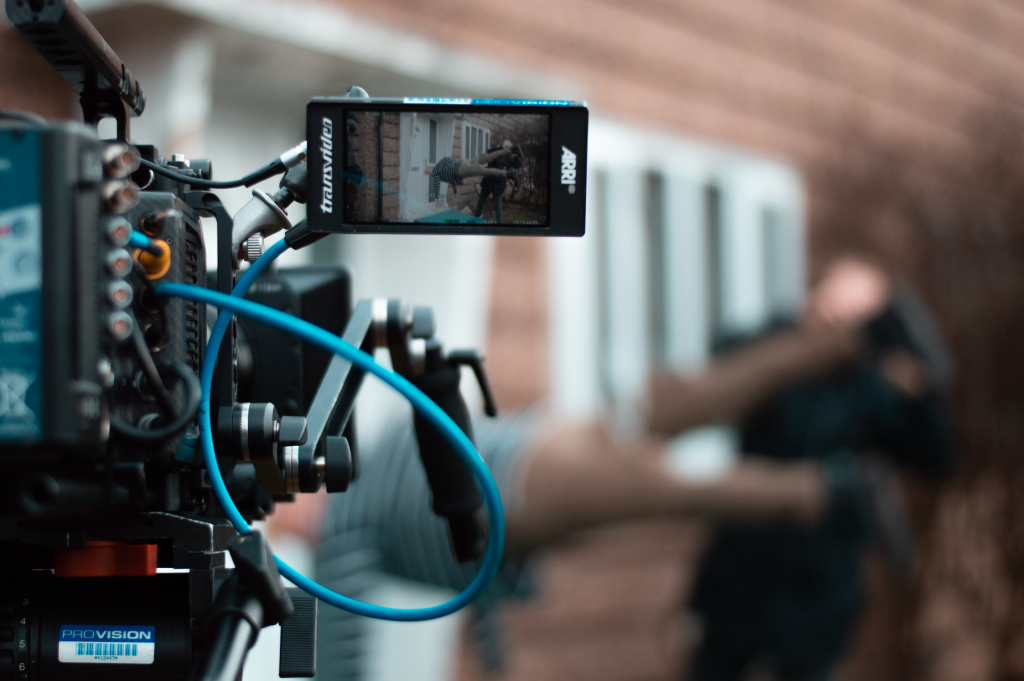
‘Hanging On’ shoot. Image Credit: Anastasia A Arsentyeva.
There’s a growing media presence in the North, with LIFF, Screen Yorkshire, and Channel 4 in Leeds. How do you see the industry shifting geographically?
A few years ago, people finally realised there’s life outside the M25. That shift has improved access to funding. The overall pot hasn’t necessarily grown, but it’s more open. You no longer need to move to London for a career in media, although it’s still tough to break into film or TV.
When we were making ‘Hanging On’, we struggled with Leeds City Council’s filming restrictions. That’s why you sometimes see so many productions in Bradford and Manchester instead. That said, with organisations like Screen Yorkshire championing talent and projects across the region, it does feel really optimistic.
And finally, if you had to give advice to aspiring filmmakers, what would you say?
I’m still figuring it all out myself. But a quote from 80’s filmmaker Robert Bresson always sticks with me: “Make visible what, without you, might perhaps never have been seen.” That really shifted my perspective. You can watch something like ‘Trainspotting’ and think, “I want to make something the same as that.” But the truth is, they’ll probably get Danny Boyle to do it again because he does it so well. So maybe, ask yourself: what is the story that only I can tell?
***
To explore more of Alfie’s work, follow him on Instagram @alfiebarka or visit https://alfiebarker.com/.
Find out more about this year’s Leeds International Film Festival (30 Oct – 16 Nov) at leedsfilm.com.
Keep an eye on The State of the Arts throughout October and November for more interviews, coverage and film reviews from LIFF 2025.
Filed under: Film
Tagged with: Alfie Barker, community, director, leeds, leeds film, Leeds International Film Festival, liff, northern cinema

Comments