
Record stores as resistance: meet the people behind Leeds’ thriving vinyl scene – Interview
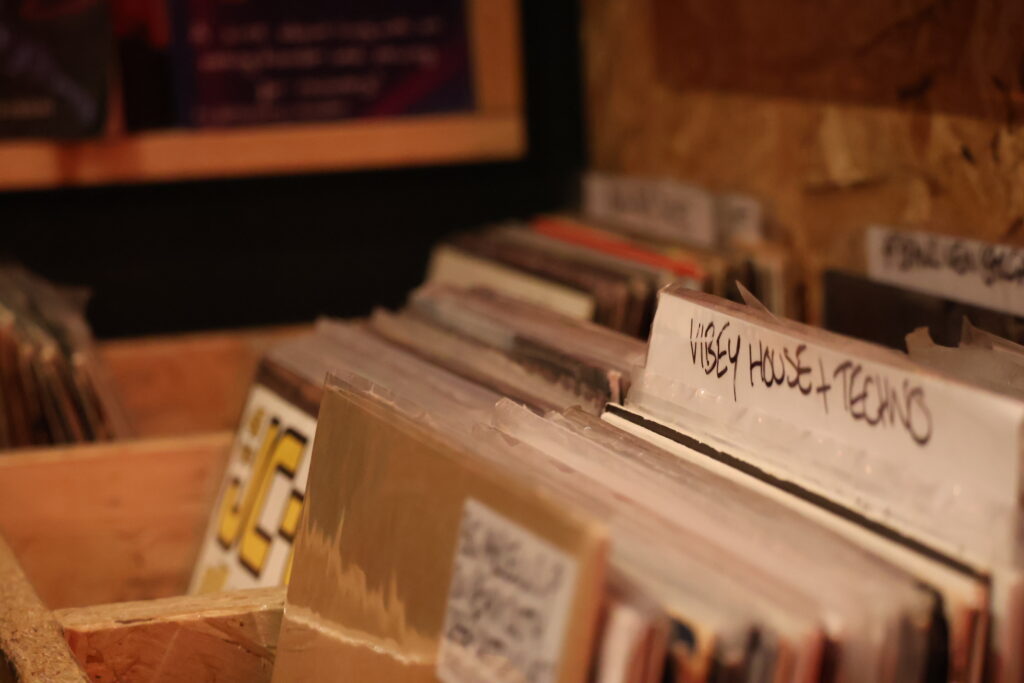
Holding Patterns. Image Credit: Will Baldwin-Pask.
Digital exhaustion comes for all of us at some point. The ads, the algorithm, the AI slop, the irritation with your own doomscrolling habits – the digital chips away at everyone.
But fear not. The physical has been fighting back. Cities still exist, providing you with real spaces, sheltering real people, who are making real culture. Few places embody that spirit better than Leeds. Known for its close networks and DIY spirit, you’ll find a passionate approach to music in this city that evokes a lot of interaction and interest from citizens.
Its thriving vinyl scene is a testament to that. Record stores, DJs and collectors are driving a culture of the tangible and the intentional, profusely arguing that physical music culture remains as vital as ever. Three of the best stores in the world are based here, according to the FT, as well as one of the country’s biggest monthly record fairs.
The turn towards wax is a nationwide trend, with vinyl sales across the UK rising consistently for 17 consecutive years. For some of the Leeds scene’s arbiters, the success of vinyl is a necessary reaction to the systems of music consumption, forced upon fans since the advent of big streaming and algorithms.
“It’s a response to everything being available.” says Jim, who runs Meanhood, a record store, studio and community space operating out of the basement of Vinyl Whistle record store in Headingley. Jim came through Stockport and Leeds as a collector and DJ, specialising in electronic, hip-hop and the dancier end of things. He’s fought for vinyl for decades, so knows the artefacting value it can have.“To hold something that even somebody else has damaged in the past – that’s amazing because it’s authentic. It’s a piece of something that existed from an old world.”
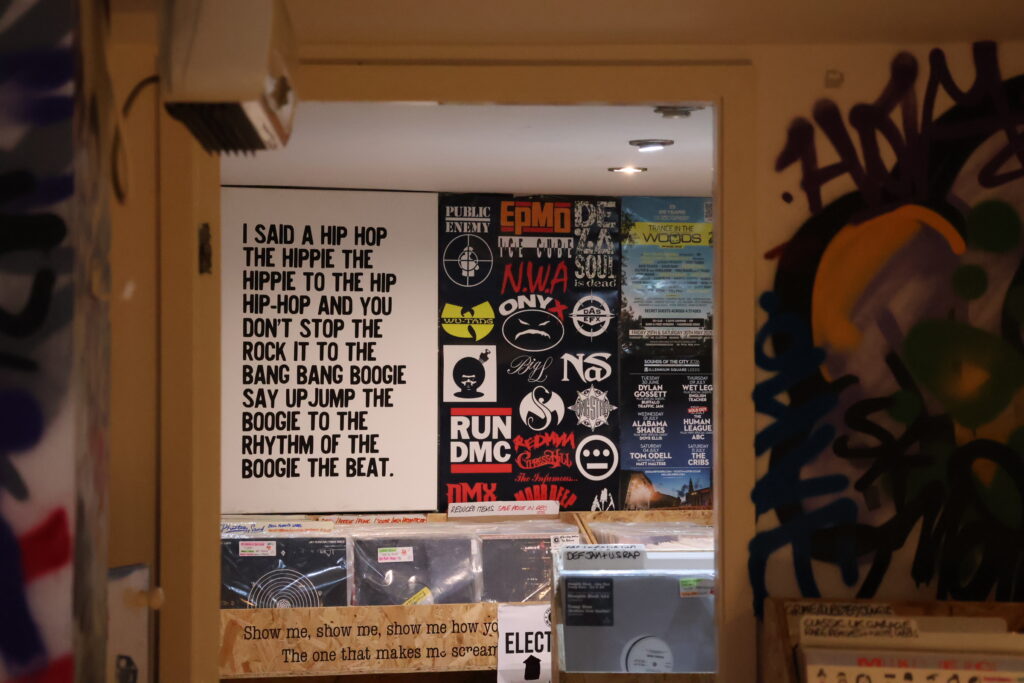
Meanhood. Image Credit: Will Baldwin-Pask.
Elliot Smaje, veteran of the regional vinyl trade and owner of Wall of Sound on the Headrow, goes further. These are not just time capsule items – these objects are “a piece of art.” “The record industry got it right when they made the record the defining piece of art to convey music to people. And a good record shop is an experience through which to further that. People remember finding the record as part of owning it. Who remembers the time they streamed or downloaded?”
Elliot started his record store career in the 80s in Leeds. He’s seen vinyl fight off new, lower friction forms like the CD or the iPod. “Everything before the return of vinyl was about the easiest thing… So why still get vinyl? The only answer is the aesthetic: the sound of vinyl on a great system, the act of putting on the record, looking at the sleeve, going out and rooting for the next one. Discovering.”
The final element is perhaps the most radical. It’s one thing to offer an object that helps consumers feel like they’re unplugging from the hive. It’s another to remain the preferred source of music for working DJs, who could easily acquire any track they want digitally for a fraction of the cost.
In its heyday, when all radio and club DJs used vinyl, access to well-stocked record stores was essential, and the record store owners fed the scene. These were the people sourcing the best stuff from around the world, for the best DJs to bring to audiences. In the chain of command, the record store was the starting point, and the store owners held the power.
In Leeds, a city packed with vinyl purists, it still plays a key role in the discovery and partying ecosystem. OSH, a DJ/event programmer who stocks the vinyl at Holding Patterns, highlights the fact that a “lot of the vinyl DJs in Leeds have got these weird and wonderful collections… DJ Subaru and Herbie (Underwood) have crazy stuff,” he says. “They’ll be like, hey, do you want to hear some double backwards Turkish flute in six-eight rhythm? With gabba?’ I don’t think you’d find that unless you had some dedicated, obsessed weirdo sniffing that kind of stuff out.”
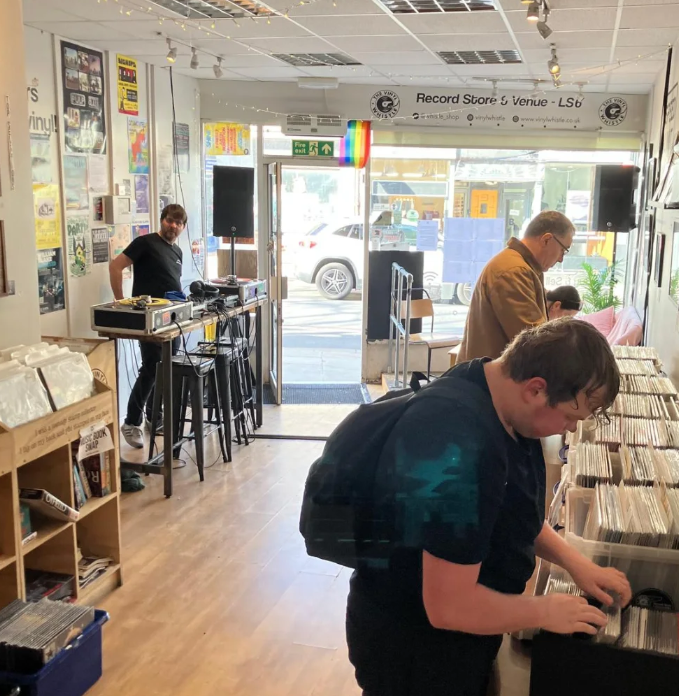
Vinyl Whistle. Image Credit: @vinylwhistle
Leeds’ weird, wax-loving DJs are spoiled for digging: from the indie bins of Jumbo, to the dub bangers spilling out of Tribe; the sub-genre electronics of Released in the Corn Exchange, to the hard riffs at Crash on The Headrow. All the niches are covered, with experts like Elliot, Jim and Oisin at the desk ready to guide browsers to just the right discovery.
The strength of the Leeds ecosystem hinges on authenticity. “The underground has had to redefine itself because everyone can look now,” Jim says. “Subcultures years ago got to exist in isolation where you could do what the fuck you wanted”, but now that the vinyl hype has grown beyond its subcultural boundaries, brands and advertisers “peer over the top and look in”, appropriating what they see, in search of easy access to audiences via a badge of authenticity. Global café chains displaying curated vinyl boxes by the till or major supermarkets building their festive ad campaigns around record buying are clear signs of this.
“You can tell who’s pretending and who isn’t,” he says.
Enthusiasm for vinyl, coming from an authentic intentional place, is essential for the sustainability of these stores. A boom of buyers driven by the Instagrammability of a glossy sleeve leaning against an IKEA unit in a new build, cannot fuel a margin long term.
For Jim, Leeds has struck the right balance between protecting ‘real’ vinyl culture from exploiters, whilst not being overly exclusive: “Subculture needs to have tourists in it. We need to be open enough so that people who don’t care as much as us can come through and buy records, pay money, share it,” whilst making sure the scene doesn’t fall into the wrong hands.
That attitude is essential for the sustainability of a business model with the tightest of margins. “The barriers to entry are higher than ever before,” explains Jim. “The guys who sell new records make like twenty percent. That’s why everyone has to sell coffee. Guys like me who find records from all over make more per record, which is why often you find a parasite record shop in a real record shop…”
“People do it for the love of it, because there’s really not a lot of money in it at all,” says OSH. The whole thing is built on dedication, with higher costs. DJs shell out “fifteen quid a pop for maybe one out of four tracks that you like” per record. Over a year, that adds up.
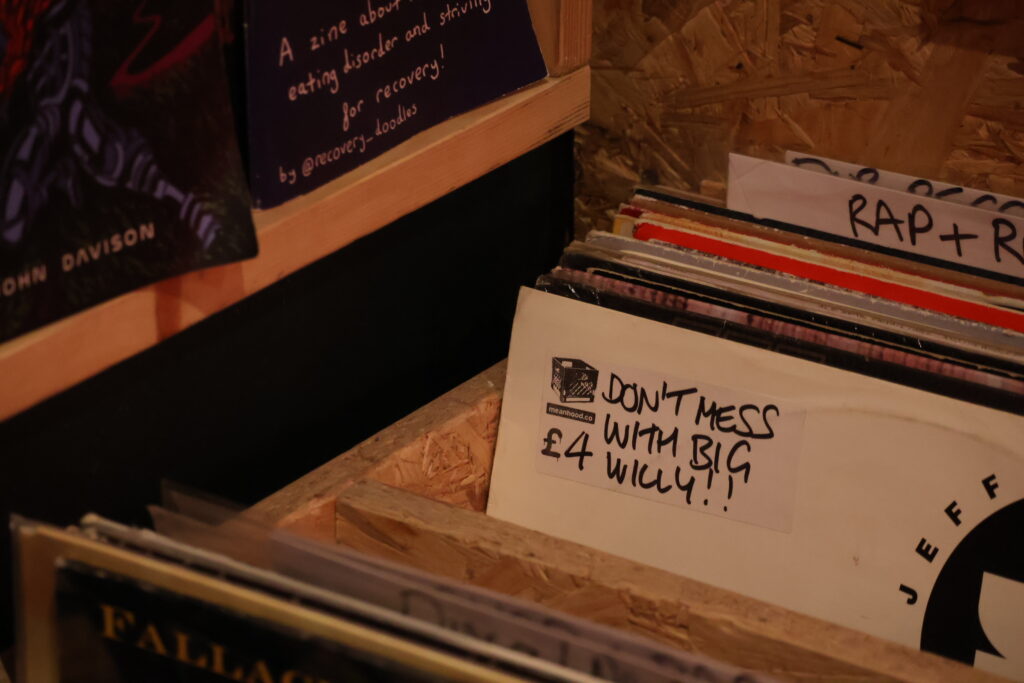
Holding Patterns. Image Credit: Will Baldwin-Pask.
But that inefficiency is precisely the point: in an era where every facet of music listening is frictionless and monetised, financial sacrifice becomes part of the discipline. “You put your money where your mouth is, ” says OSH.
“We went from over 2000 record shops down to just over 200 at one point – I even lost one,” says Elliot, remembering the decline of the early 21st Century, when CDs and iPods were coming close to wiping out their vinyl ancestor. “It wasn’t viable.”
But Elliot, whose business has steered through Halifax and Huddersfield over the years, is optimistic now back in Leeds. “It is more vibrant and diverse in the possibilities of what goes on,” he explains. “The depth of interest is phenomenal. It is definitely at a peak but it doesn’t feel like a fad. It is a cultural shift.”
“There’s a really good spread in Leeds now of people that are doing different bits,” says Jim, “There’s an authenticity between what they’re after, what we’re after, and the fact that they’re in a completely helpless place with all the shit that’s going on in the world.” A hardened soldier of the subculture, Jim continues: “Let’s make some art. Let’s have some protest music. Let’s do some good shit. Because all that matters is this around here. We can’t control anything else.”
These vinyl vanguards of Leeds make purchasing, playing, and obsessing over vinyl sound like an act of resistance. It’s hard to disagree. To be in that world is to be in a rebellion against a monopolistic digital market you never asked for, that suppresses the value of the art you love and the livelihoods of the artists that make it. Vinyl is an investment in your immediate community, a contribution to the neighbourhood that physically surrounds you, a return to wholesome mercantile experiences that are good for the soul, and good for the bank accounts of the people across the counter. Humans touching real objects, humans having in-person chats, humans trading human culture without every inch of it being sucked dry by silicone valley.
During my interview with OSH, one of the dedicated, obsessed weirdos he mentioned – Herbie Underwood – politely interrupts, to update us on their successful digging for the day. They’re buying the same records that OSH imported and recommended. They have a proper chat about the tracks, leaving both parties visibly buzzing about the fact this discovery has taken place. “Remember, you’ve got to try it on 33 and 45…”
Something like that simply cannot happen over a streaming platform. In an age defined by growing distance between us, the face-to-face passing of knowledge, guidance, joy, and floorfillers, which record stores continue to facilitate, makes them more powerful than ever.
***
Filed under: Music
Tagged with: crash, Elliot Smaje, Holding Patterns, jumbo records, Meanhood, OSH, record fair, Record Store, Released, tribe, vinyl, Wall of Sound
Comments