
Memory, Class and Storytelling: Bill Hodson on ‘Worktown’ – Interview

Worktown book cover. Image Credit: Bill Hodson.
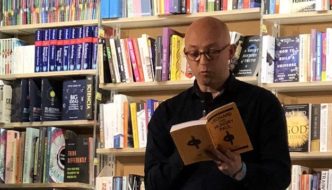
Bill Hodson is a writer from York who grew up in Bolton. After the success of his debut crime novel ‘Tracking Back’, he has released ‘Worktown’, a historical novel centred on the Mass Observation project in 1930’s Bolton. TSOTA spoke with him about writing later in life, returning to the landscapes of his childhood, and giving voice to working-class histories often left out of the record.
After a career in adult social services, Hodson didn’t begin writing fiction until his mid-fifties — an age when many imagine winding down rather than starting over. But redundancy, he explains, gave him the opportunity he needed to finally pursue the lifelong ambition he’d carried since studying English literature at university.
“I’d always wanted to write a book, but I’d never had the time,” he says. “I had a busy career as Director of Housing and Social Services for the City of York. When I was made redundant from that job, I was only 54 — far too young to retire. But it made me realise that when you’re young your life is like a river, splitting into different directions. Over time you choose one course. Redundancy gave me back the possibility of other lives.”
He returned to writing slowly: first short stories, then drama, and finally, after building confidence, his debut novel. “When you start, you don’t know if you can write. But joining creative writing classes helped me learn a lot,” he says. Drama, especially, became an invaluable apprenticeship. “In a play, every scene must stand alone, and you need to know the backstory of every character, even if they’re not necessarily things you’ll use in the play. Those skills became my groundwork for approaching novels.”
The transition to long-form storytelling, however, came with its own challenges. “A novel takes me about eighteen months. Starting at word zero and heading toward ninety thousand can feel like a long haul,” he admits. His early attempts at the book that became ‘Worktown’ faltered. It wasn’t until he’d finished ‘Tracking Back’, that he found the self-belief to return to the idea. “Once I’d finished one book, I knew I could write. So when I hit rough patches again, I just pushed through. That mentality made all the difference.”
‘Worktown’ takes Hodson back to Bolton and to the extraordinary 1930s Mass Observation project, which attempted to catalogue the daily lives of working-class people in forensic detail. The novel is threaded with memory, family history, and a decades-long emotional pull toward the place he left more than fifty years ago.
“It’s a very personal book,” he says. “I find myself dreaming about Bolton a lot, but always as it existed in my childhood, which of course is a place that no longer exists. When I went back a few years ago, the house I grew up in was in a terrible condition. Distances that once felt huge, like the walk to school, seemed tiny. Memory plays tricks.”
Though Bolton today is a different town from the one of his childhood, he still felt “an innate understanding of how the place ticks.” As a result, personal anecdotes folded naturally into his fictional landscape. “Where my dad lived, in Barrow Bridge, the house is still there and I remember it from visiting my grandmother there in the 60s. My dad used to tell a story about the lake at the top of the village, where day trippers used to come for weekends or holidays. My grandfather, who could play the harmonium, and my dad, who used to sing and drum, would perform for these tourists. That story always touched me and putting it into the book helped me connect my family’s memory to the town’s history.”

Joseph Rowntree Foundation (JRF) and Joseph Rowntree Housing Trust (JRHT) housing board, Wednesday 13 September, 2017. Image Credit: Jonathan Pow/[email protected]
The Mass Observation project’s attempt to document everyday working-class existence fascinates Hodson. For him, it isn’t just about social history — it’s about visibility.
“I’m from a working-class background. My parents left school at 14 and worked in mills, like generations of our family before them. Working-class life is largely undocumented. You know the births and deaths, but not what people were like — the humour, the habits, the personality.”
Mass Observation, he says, was a rare attempt to capture that world — even if it ultimately collapsed under the weight of its own ambitions. “They counted everything — even the number of chips in a chip bag. They wanted to reach the granularity of people’s lives. Their hope was to present the government with facts that would spark reform. That never happened; they drowned in information. But what remains is a remarkable chronicle of a vanished world.”
The photographs, in particular, offered him a window into the emotional character of Bolton’s people. “You see smoke-blackened streets, factories, poverty… but you also see people laughing, gossiping, hanging out washing, going to football. A defiant desire to make the most of life. As a novelist, that gives you a deep sense of personality and resilience.”
A central question of ‘Worktown’ is whether observing a community leads to genuine understanding — or whether real change requires action.
“We know what’s coming after the novel ends,” he says. “Within a year, Britain goes to war. Out of that horror comes a new sense of collective identity: the idea that ‘we’re all in it together.’ After 1945, you get the NHS, universal education, the welfare state. Those top-down policies changed lives — they’re what allowed me to step out of working-class life.”
But he also believes strongly in local, community-driven change. “Party politics can feel hopeless, but communities do extraordinary things: tackling antisocial behaviour, running food banks, supporting refugees. Those things change lives too. Ultimately, if your life is going to change, it’s probably people around you who’ll do it. Not someone swooping in from outside.”
This dual belief shaped the moral heart of the novel: that understanding each other requires more than observation. “These people were observed in immense detail, but no one asked what they thought of their own lives. As a novelist, you can go into people’s heads — that’s the gift of fiction. I wanted to give voice to lives recorded but never heard.”
***
‘Worktown’ was published by the Book Guild on 28th October, 2025 and is now available to order on their website, as well as any bookshop or the usual online sellers.
Comments