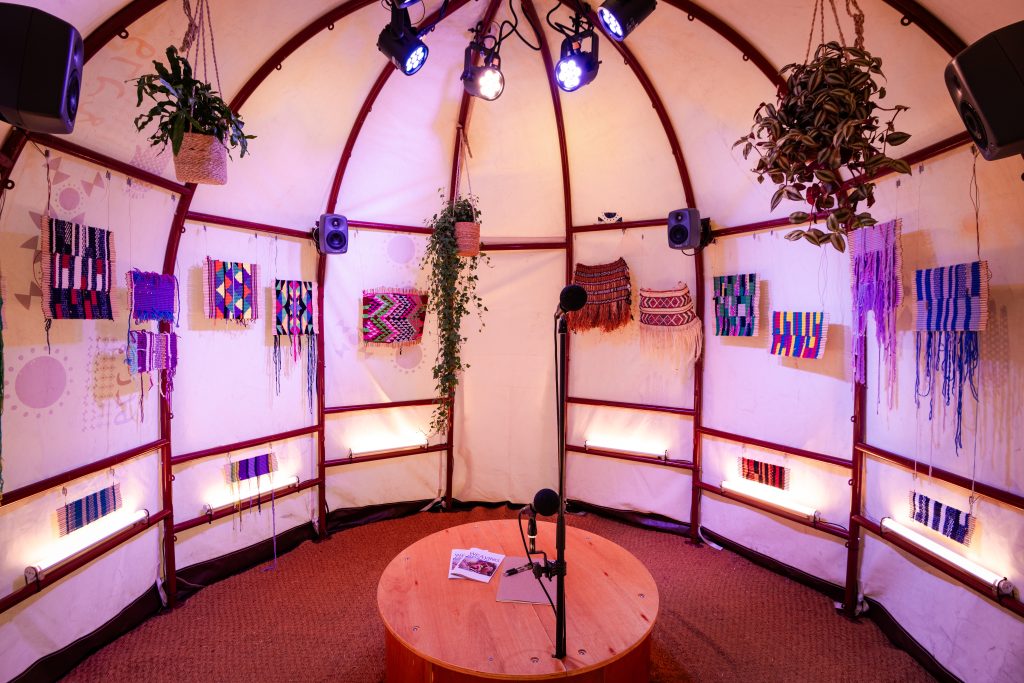
House of Weaving Songs, Dhaqan Collective. British Textile Biennial 2025. Photo: Matt Savage.
The ‘House of Weaving Song’ is an interactive sound and textile installation by the Dhaqan Collective, led by Ayan Cilmi and Fozia Ismail. Inspired by the nomadic Somali Aqal, the work is on display at Blakey Moor, Blackburn, as part of this year’s British Textile Biennial – a free festival exploring East Lancashire’s textile legacy and its global connections. We sat down with Ayan and Fozia to learn more.
The domed steel structure houses touch-responsive woven tapestries. Drawing from the portable, dome-shaped homes traditionally built by Somali women, it reimagines ancestral knowledge using contemporary materials and interactive technology.
“Because Somali nomads are constantly on the move, they need to be able to pack up, rebuild, and reuse materials,” Fozia explains. “Homes need to be built in a very efficient way.”
Both artists were most surprised to discover that women are the ones to construct the Aqal. “I’d been inside an Aqal Soomaali,” Fozia says, “but growing up in Britain, I just assumed it was made by men.” However, in Somali tradition, when a woman marries, her female relatives and friends gather to build her home over ten days of weaving and singing.
“No one can leave until the first part of the house is woven,” Ayan adds. “It’s joyful, intense, full of care and memory; a deeply feminist and communal act.”
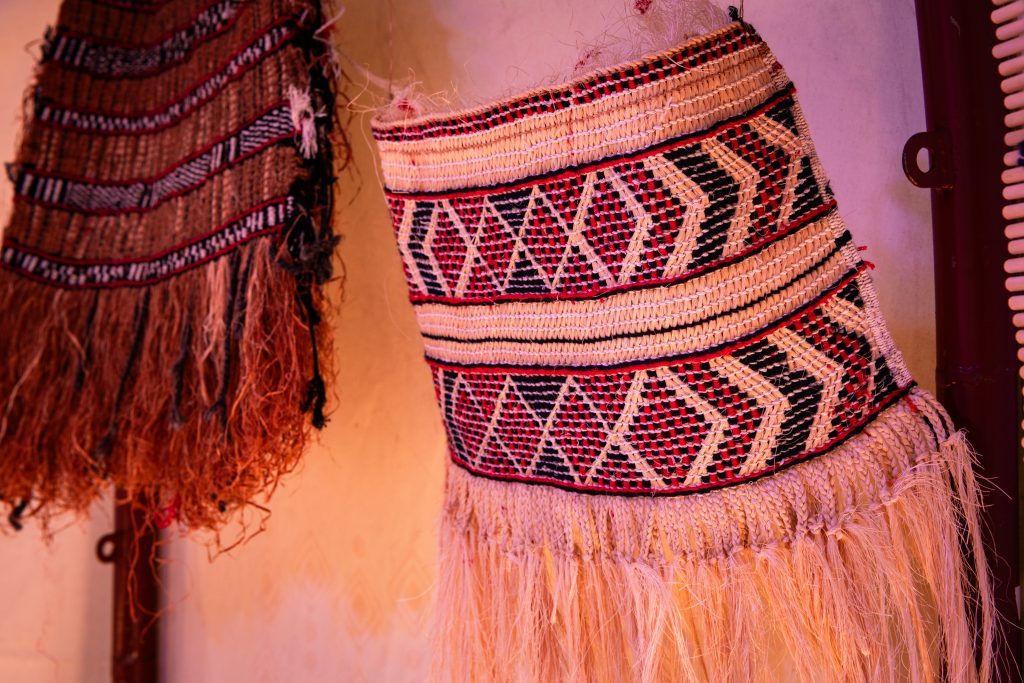
House of Weaving Songs, Dhaqan Collective. British Textile Biennial 2025. Photo: Matt Savage.
Inspired by these rituals, the installation invites touch. As visitors run their hands across the woven surfaces, they trigger sensors embedded in the fabric, which play archival recordings of Somali women’s voices and a 360° soundscape woven with story, song, and memory.
The idea first took root during a workshop six years ago, when an elder Somali woman shared a tapestry she’d woven and a song that matched its pattern. “It was almost like she was reading sheet music,” Fozia recalls. “From then on, we knew we wanted to learn to weave and to explore how sound could be part of that process.”
They began learning during COVID via Zoom, guided by Melbourne-based master weaver Muhubo Sulieman of Qaymi Arts. Without access to traditional materials, they improvised with bamboo dowels and wool. “Some of those early pieces were real Frankensteins,” Ayan laughs, “but we’ve kept them.”
Later, as residents at Pervasive Media Studio in Bristol, they began experimenting with conductive touchboards, “the kind that can make a banana sing,” says Fozia. This led to their first working prototype and support from Arts Council England to deepen their research into Somali folk songs and weaving traditions.
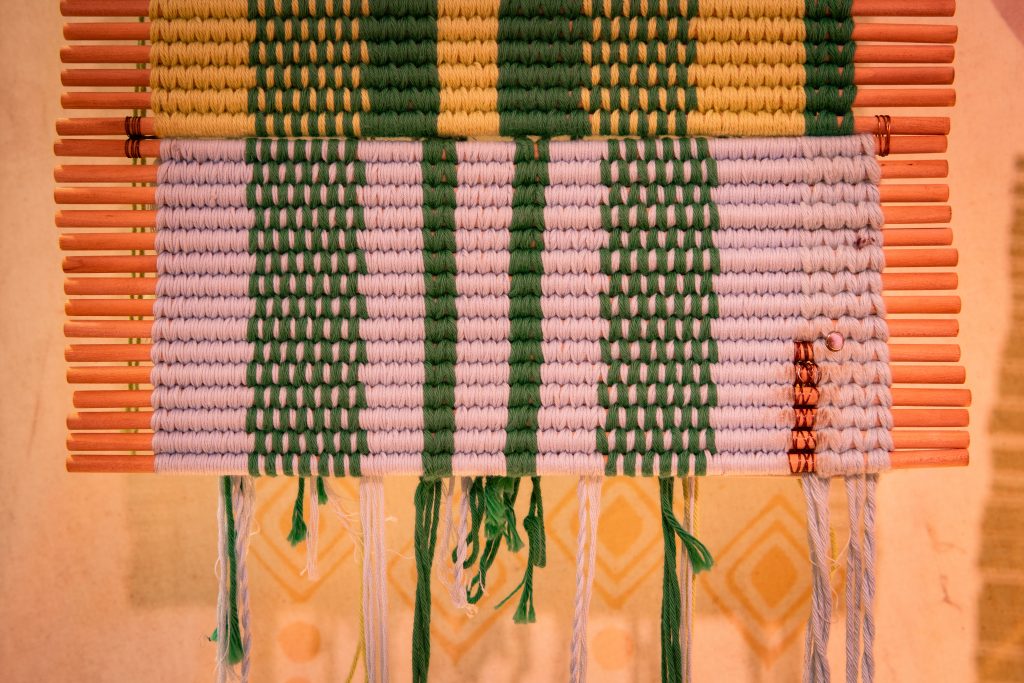
House of Weaving Songs, Dhaqan Collective. British Textile Biennial 2025. Photo: Matt Savage.
They joined Playable City, an intense six-month lab where the project expanded from a single interactive tapestry to a tourable structure composed of many. A team of collaborators, from a Somali music archivist and sound engineer to a lighting designer and a fabrication team, helped bring the installation to life.
“We also worked with a graphic designer to create Somali patterns and text using ancient script, including the words for ‘house’ and ‘home,’” Ayan adds.
“That’s how it all came together,” she continues. “From one powerful workshop moment to a full immersive space. You can have a strong idea, but it takes belief and support to create something that really connects.”
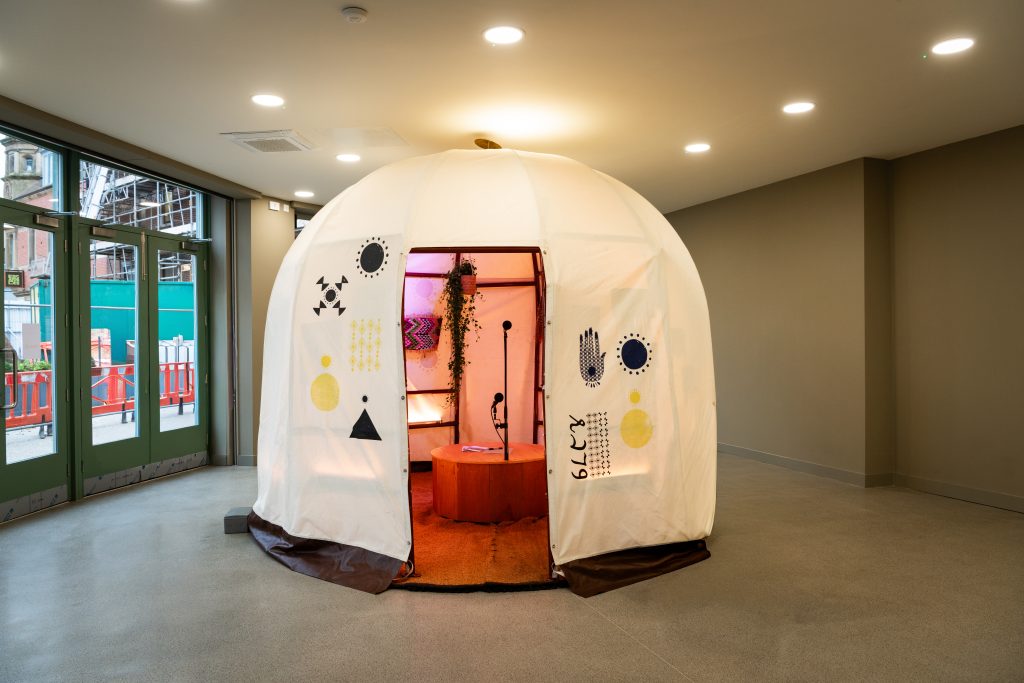
House of Weaving Songs, Dhaqan Collective. British Textile Biennial 2025. Photo: Matt Savage.
And it does connect. “The weaving process unlocks so many conversations,” Ayan says. “It gets you out of your head and into your body. It creates a calm, open space where people talk honestly about things they might otherwise avoid.”
The installation speaks to themes central to this year’s Biennial — particularly the urgent need for sustainability in textile innovation. It invites conversation around migration, women’s labour, environmental fragility, and the loss of nomadic traditions.
“It’s becoming rarer to find these homes,” Ayan explains. “Due to climate change and industrialisation, more communities are relocating to cities. And with that comes disconnection from cultural practices.”
“These Indigenous communities have lived in balance with the land for generations,” Fozia adds. “They haven’t caused the climate crisis. They live sustainably, within ecological limits, and yet they’re the most affected. There’s a deep injustice in that.”
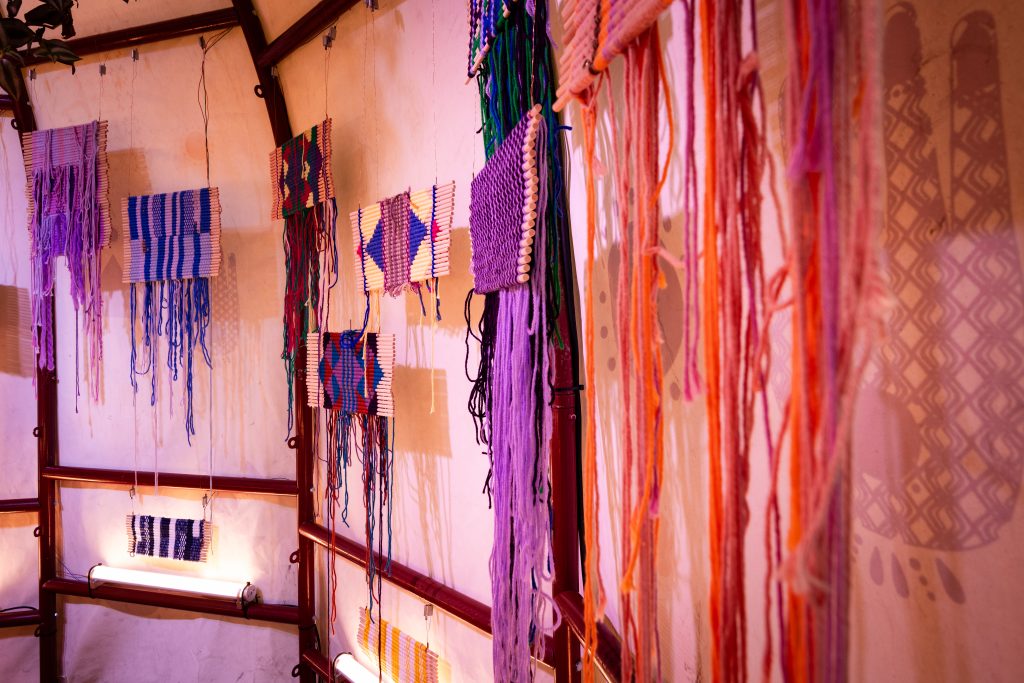
House of Weaving Songs, Dhaqan Collective. British Textile Biennial 2025. Photo: Matt Savage.
Even though these traditions are at risk of being lost, Ayan and Fozia are determined to preserve them. “Many of the songs in the installation are instructional: how to weave, how to live, how to care,” Ayan says. “They’re practical, meditative. They’re a core part of Somali home-building and our identity.”
Reconnection, for both artists, has been a personal journey. “So much of our lives was spent trying to settle, trying to integrate,” Ayan reflects. “ But part of having a strong sense of self is knowing where you come from and understanding your culture.”
“We wanted to celebrate that through this ancient, embodied way of making,” she continues.
Fozia adds: “These weaving practices are some of the oldest in the world. They don’t use looms. The body, the trees, the community become the loom. It predates looms altogether. We want to highlight this artistic heritage, the techniques, the colours, the patterns, they are incredible,” she concludes. “Just because it’s not ‘Western-trained’ or labelled as fine art doesn’t mean it’s not art. It has value in and of itself and that is worth celebrating and saving.”
***
The House of Weaving Song is free to visit at Blakey Moor until 2nd Nov 2025. For more information on the British Textile Biennial and upcoming events, visit https://britishtextilebiennial.co.uk/events/dhaqan-collective-the-aqal-house-of-weaving-songs/.
To keep up to date with the Dahqan Collective you can visit their website or follow their instagram @dhaqancollective.
Filed under: Art
Tagged with: activism art, art, crafts, feminism, Immersive Art, indigenous, Storytelling, The Dhaqan Collective, weaving

Comments