West Yorkshire Writes: Emily Zobel Marshall on Nature, Othering and Belonging in ‘Other Wild’ – Interview
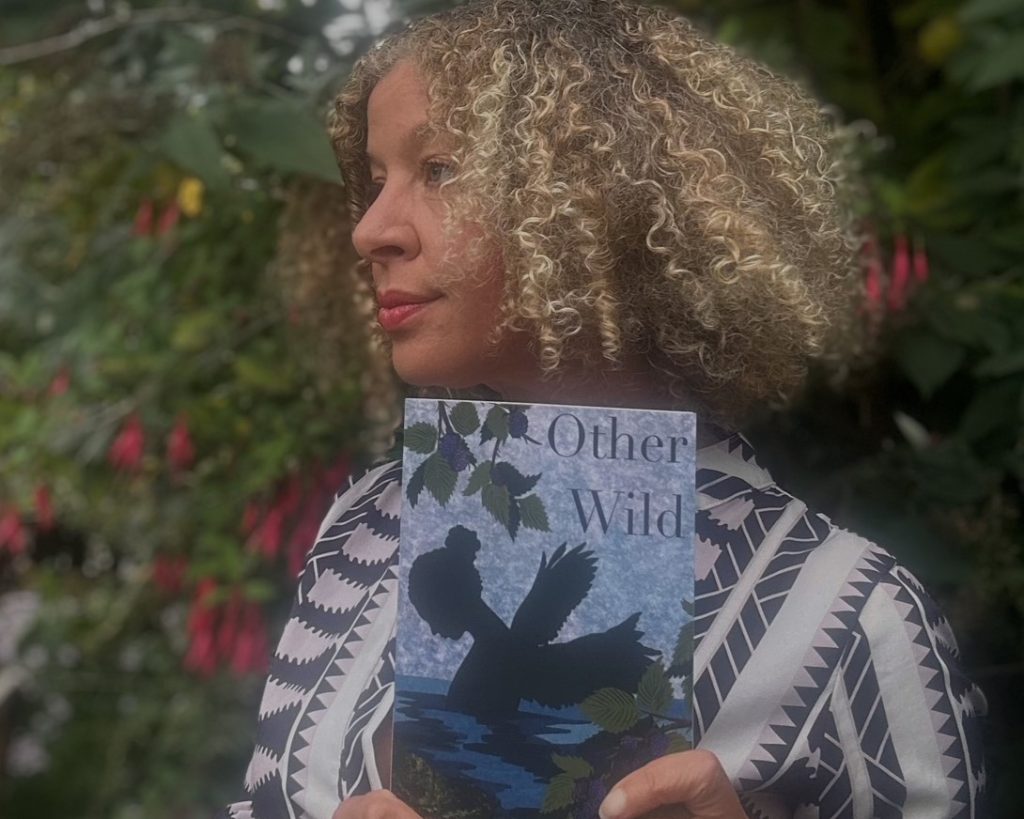
Image Credit: Emily Zobel Marshall.
‘Other Wild’ (published by Peepal Tree Press in 2025) is the latest poetry collection from French-Caribbean British poet Emily Zobel Marshall. Having grown up in the mountains of Eryri in North Wales, she now teaches Postcolonial Literature at Leeds Beckett University. A continuation of the themes explored in her debut collection ‘Bath of Herbs’, ‘Other Wild’ expands her engagement with nature, identity and freedom. We spoke to Emily about the collection and the experiences that shaped it.
Emily describes her journey into writing as “natural”, having grown up surrounded by a deeply creative environment. Her father writes anarchist philosophy, her mother produced programmes on African and Caribbean music for the BBC World Service, and her grandfather was a well-known writer from Martinique. First published at the age of 11 in The Oxford Book of Friendship, she has since gone on to write extensively across both academic and creative forms, including her first poetry collection in 2023.
That first collection emerged from a period of profound personal upheaval. “I was in the Philippines, on Komodo Island, when I got a call that my daughter had been diagnosed with leukaemia,” Emily explains. Around the same time, her mother passed away suddenly from pancreatic cancer, just as the COVID-19 pandemic also began. She recalls an analogy from her editor, tutor and mentor, the Grenadian poet Jacob Ross: the key to storytelling is to put your character up a tree and then burn the tree down. The story lies in how they respond. “On that plane, I felt like my tree was burning down. I realised I had no control over that, but I did have control over how I responded.” Her response was to write.
Growing up in the mountains of North Wales, immersed in wild landscapes (walking, hiking, swimming in rivers) has long been a way for Emily to process experience and reconnect with a sense of aliveness. ‘Bath of Herbs’ reflects this, looking to the natural world as a source of solace during periods of stress, while resisting the urge to anthropomorphise it or project human emotion onto it.
After completing that collection, however, she felt there was more to say. “I still had so many more poems in me that I needed to get out.” During this period, Emily trained as a mountain leader and is now one of only three female mountain leaders of colour in the UK. Spending extended time in the mountains, and developing a passion for cold water swimming, deepened her understanding of how physical immersion in nature can disrupt cycles of thought. “Whatever you’re feeling, a dip in cold water and you come out a different person, mainly because those thoughts are frozen out of you,” she laughs. “ It forces you out of your head and into your body.” In this sense, ‘Other Wild’ returns to the natural world in pursuit of freedom, while also interrogating the social binaries that often constrain this feeling.
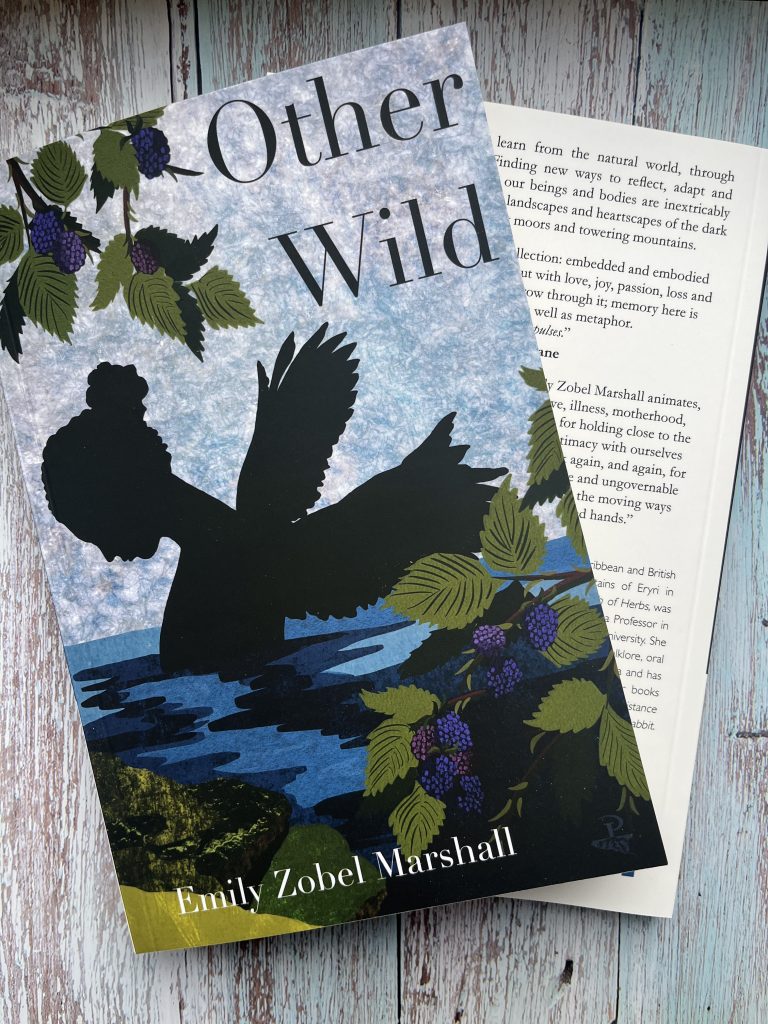
‘Other Wild’ by Emily Zobel Marshall. Image Credit: Peepal Tree Press.
One such binary is the patriarchy, which Emily engages with through mythology and folklore. Powerful female figures such as Mami Wata, Elen of the Mabinogion, and Blodeuwedd appear throughout the collection, reworked to challenge patriarchal narratives. Many traditional myths, Emily notes, centre on women’s suffering. In the story of Blodeuwedd, a woman created from flowers as a gift for a prince is transformed into an owl, the most hated of animals, as punishment for falling in love with another man. Emily’s reimagining shifts the emphasis: rather than a punishment, the transformation becomes a form of liberation. No longer stiflingly made out of flowers for a man’s toy, she’s fierce and dangerous.
Many of the poems are written in the first person, creating a sense of intimacy that draws the reader directly into the speaker’s experience. Family (her children, husband, parents and friends) appears throughout. In the acknowledgements, she writes: “Jenny Zobel—Mum—your absent presence fills every page of this book. I live in gratitude for your unconditional love.” The poems trace a shift in how grief is experienced over time. If ‘Bath of Herbs’ captured the immediacy and rawness of loss, ‘Other Wild’ moves towards remembrance and re-encounter. Grief remains, but it changes in texture, becoming a space for storytelling, reflection and continued connection through our shared experience of loss.
At the same time, the collection resists idealising family life. It explores the tensions, frustrations and asymmetries of power that shape familial relationships. This is particularly evident in “Why I Hated You At The Bus Shelter”, which captures the isolation Emily felt as a teenager growing up in rural Wales – living a kilometre from the road, without a TV, pipes that used to freeze in the winter, and increasingly aware of her difference from her peers. “There was a point where I stopped wanting to make dens and just wanted to feel normal,” she reflects. “My dad always wanted to help me, but sometimes he didn’t understand what I was up against.”
Placed between poems that express admiration and affection for her parents, this tension reveals the complexity of familial love: enduring, but not without friction. Emily is careful, however, not to over-determine meaning. “I want each poem to have space for people to bring their own experiences,” she says. This openness has resonated strongly with readers, many of whom, she notes, have told her the poem made them want to call their fathers. “That’s the biggest compliment.”
While deeply personal, the collection also situates individual experience within broader historical and political contexts. Emily’s interest in colonial histories, shaped in part by her grandfather’s experiences growing up on a sugar plantation in Martinique, runs throughout the work. In “The Song of the Archive”, influenced by Derek Walcott’s “The Sea is History”, the sea becomes a repository of memory, holding the lives lost during the Middle Passage. For Emily, this history is not confined to the past. She draws connections to the present moment, where migrants and asylum seekers continue to be dehumanised, their deaths at sea often unnamed and unrecorded. “I’m trying to speak to that,” she says, “because it feels deeply important.”
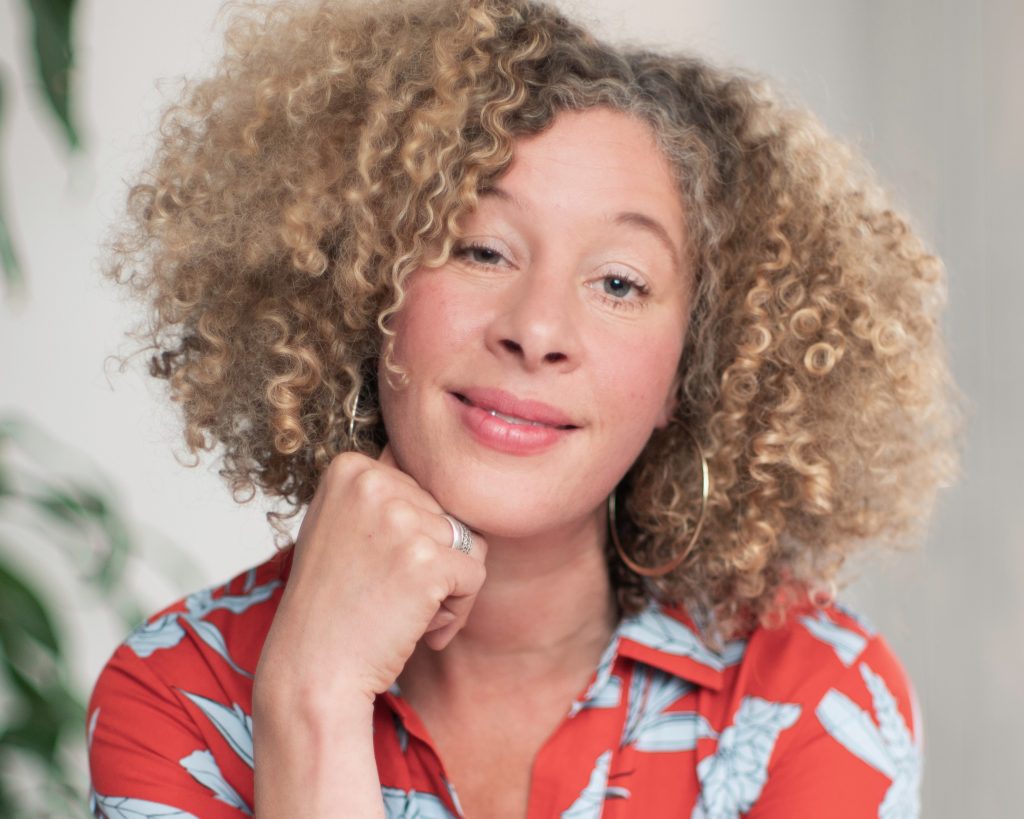
Emily Zobel Marshall. Image Credit: Ashley Karrell.
This concern with history and displacement extends into the collection’s treatment of nature as both a site of belonging and a space of estrangement. The title draws on the work of postcolonial theorist Edward Said and his concept of “othering”: the processes through which individuals and communities are marked as different. Growing up light-skinned and mixed-heritage in Wales, and later moving to Yorkshire, Emily notes that she has often felt subtly “othered”. She wanted to explore how that othering impacts her relationship with wild spaces.
As a child, the landscape offered a sense of acceptance, an escape from insults thrown at her on the bus, but this relationship shifted over time. As a teenager, it felt isolating; now, in Leeds, it offers a release from the constraints of urban life. Yet this is never a reciprocal relationship. “It’s not responding to me,” Emily says. “It’s arrogant to think that it would be. I might feel like it refuses to offer what I came in search of, but that is an internal battle. The mountain does not change according to my will – it simply exists. Any sense of connection or resistance emerges from within us.”
This perspective leads to a broader reflection on our place within the natural world. Rather than something separate from us, nature is something we are part of. “We are the natural world,” Emily insists. Yet systems of land ownership and restricted access have eroded this sense of belonging. Reclaiming it, she suggests, is essential, not only for personal wellbeing, but for collective responsibility. “If we can’t reconnect with that sense of responsibility to protect what we are part of, we’re heading into a dangerous time.” ‘Other Wild’ ultimately gestures towards this reconnection, inviting readers to rediscover their own points of contact with the world around them.
***
‘Other Wild’ is available to purchase online from Peepal Tree Press and in-store at local bookshops like Waterstones Leeds, Colour’s May Vary, Truman Books and Grove Bookshop.
For more from Emily Zobel Marshall, follow her on Instagram or see her perform with the Northern Poets Collective at Leeds Lit Fest on Saturday 13 June.
To stay up to date with new releases from Peepal Tree Press, visit their website or follow them on Instagram.


Comments