Beauty in everyday objects: Broken//Makeshift exhibition at Sunny Bank Mills – Article
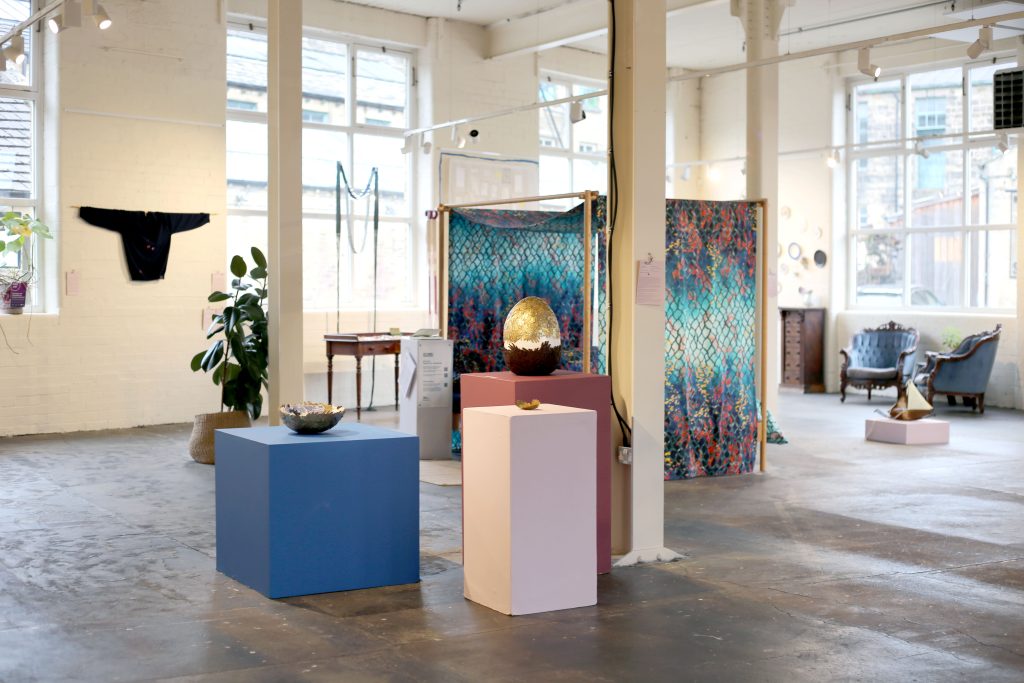
Broken//Makeshift exhibition at Sunny Bank Mills Gallery. Image Credit: Sunny Bank Mills; and Polite Rebellion.
Leeds has recently been blessed with a remarkable exhibition, ‘Broken//Makeshift’, at Sunny Bank Mills, one of the most outstanding community hubs and art galleries in Yorkshire. ‘Broken//Makeshift’, ongoing till the 24th of December, is an exhibition that celebrates contemporary craft by finding beauty in everyday objects. Anna Turzynski, the Arts Director at Sunny Bank Mills and the curator of ‘Broken//Makeshift’, along with some of the featured artists, spoke to TSOTA about methods of mending, new beginnings, overconsumption and the life cycle of things.
‘Broken//Makeshift’ perfectly highlights Sunny Bank Mills’ heritage, reflecting its rich history of textile production and a legacy of on-site making and crafting. Anna explains that one of the show’s key goals is to “pay homage to that legacy without being stuck in one dimension.” Platforming ‘Broken//Makeshift’ seemed the perfect way to commemorate Sunny Bank Mills’ craft heritage while celebrating its contemporary forms.
Anna recalls how the exhibition began with what seemed like a ruined salad bowl, a cherished gift she eventually managed to repair. That moment of stillness around a renewed object, that seemed unfixable at first, led to the realisation that things can, and should, be repaired. This was the spark that prompted the unique, forward-thinking show at Sunny Bank Mills.
The exhibiting artists, including Molly Rooke, who mended her mom’s cardigan and her uncle’s jumper by turning two old pieces of clothing into a unique technicolour patchwork with beautifully crafted stitches, mirror Anna’s philosophy. This sparked the idea that an object’s life doesn’t end simply because it’s damaged. Instead, mending can actually make it even more precious than before.
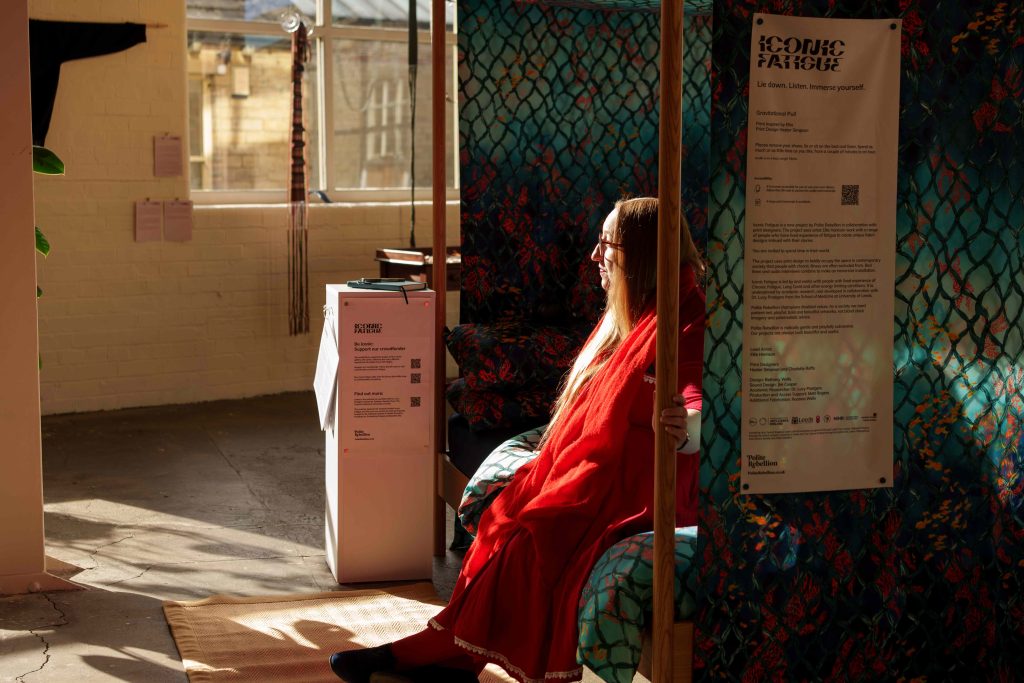
Artistic Director of Polite Rebellion Ellie Harrison. Image Credit: Polite Rebellion.
‘Broken//Makeshift’ is far from a typical craft exhibition; it brings together a striking mix of objects made from completely different materials, from everyday items to more unusual objects. The works on display range from Grace Clifford’s ‘Chocolate Horses’ to Isabel Fletcher’s mesmerising ‘Satin Overlap’, made from ballet shoes and their offcuts pressed through dense layers of satin and calico. The show also brings together historic and modern methods of mending, including Bridget Harvey’s crockery, repaired with plasters, wire and super glue, and Zoe Hillyard’s ceramic patchwork bound by a net of stitches.
Anna described contemporary craft as a “vehicle for storytelling”, something that comes through clearly in the exhibition, where each object carries its own meaning and relationship to the artist. For Grace, the theme of ‘Broken//Makeshift’ was about “independence” and “pride” in the class struggle. Denied the chance to own a horse, she cast her own from fragments of chocolate, which allowed her to materialise that longing and reclaim it as a quiet act of resistance.
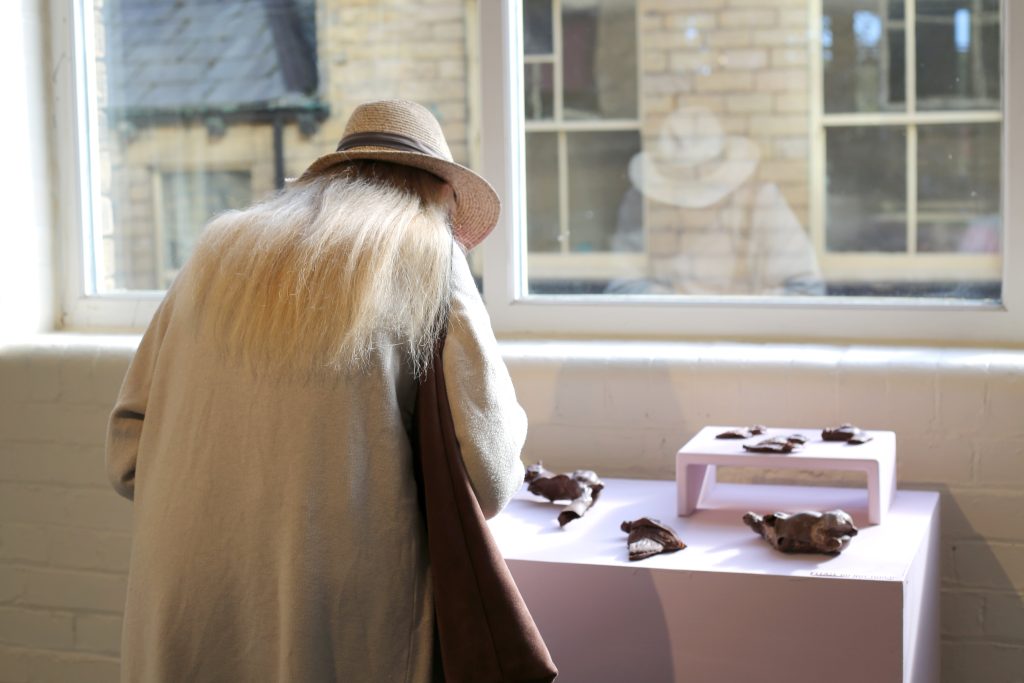
Gallery visitor looking at the work of Artist Grace Clifford. Image Credit: by Sunny Bank Mills.
‘Broken//Makeshift’ also hints at the noticeable overlap between broken things and broken people. Just as the act of mending and breathing new life into broken objects can speak to healing internal fractures, the exhibition is a space for artists to share their experiences of disability. Anna noted that this feeling emerged “organically” in the main exhibition, but they later decided to bring disability and art together more explicitly in the ‘Zine Library’, which accompanies the show. The ‘Zine Library’ developed into a space that explores the relationship between craft and disability, inviting artists and visitors to consider the idea of the maker as ‘broken’. The objects exhibited in the Library bring art, disability, and wellbeing together, representing the relationship between craft and finding that inner stillness towards yourself.
When curating the exhibition, Anna wanted to “highlight the cycle of things” and remind people to pause and think about what is going to happen to their purchase over time. The show acts as a soft nod to overconsumption, particularly through Abdulrazaq Awofeso’s work, ‘Okrika’. In this piece, the artist uses repurposed wooden pallets to depict clothing items from high-end designer brands that end up in landfill in the global south. With this statement, ‘Broken//Makeshift’ confronts the lives lost and damage caused to the environment from global supply chains, urging us to be more mindful when purchasing clothes and consider what we truly need.
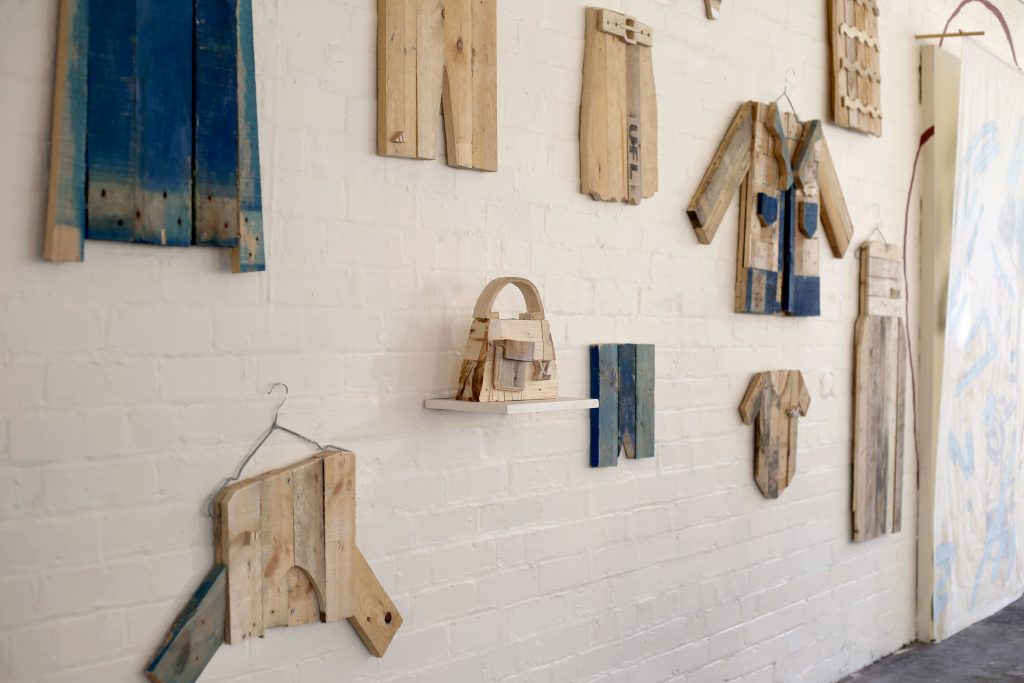
Okrika by Artist Abdulrazaq Awofeso. Image Credit: Sunny Bank Mills.
Anna speaks about how working on ‘Broken//Makeshift’ changed the way she looks at her own belongings, sparking an unexpected interest in contemporary craft and a newfound feeling of appreciation for the broken items in her house. She hopes that visitors to the gallery share this shift in perspective and leave with a renewed sense of care for the objects they live alongside every day.
***
‘Broken//Makeshift’ is showing at Sunny Bank Mills until 24th December. For more information and latest updates from the gallery, check out their website or follow their Instagram.
Filed under: Art
Tagged with: Anna Turzynski, art, art gallery, broken, Broken//Makeshift, Craft, makeshift, overconsumption, repurposing, Sunny Bank MIlls

Comments