Beyond the Screen: Why Independent Cinema Still Matters in a Streaming World – Article

Ilkley Cinema. Image Credit: Georgia Milner, Marketing and Programme Manager (Ilkley & Wetherby Cinema).
Back in 2022 TSOTA recorded a podcast about the North’s cinema landscape and the industry’s plans for recovering from lockdown. Three years later we conducted public surveys and spoke with local cinemas in West Yorkshire and members of Leeds Film International Festival (LIFF) to understand why cinema continues to matter in a world increasingly reliant on smaller and smaller screens.
In 2025 the UK Box Office generated £996.8 million. For some, the ability to escape from the real world is the main attraction of cinema, while others value its power to educate and foster connection through portraying different perspectives, as one participant in our survey highlighted: “Through cinema we step into lives different from our own and build empathy.” Ilkley Cinema and LIFF also both agree that the most powerful impact of visiting the cinema is “helping to connect people socially.”
Independent cinemas further harness film’s power to bring people together through community-focused events. An institution in Leeds since 1914, Hyde Park Picture House is a great example of this: from ‘Bring Your Own Baby’ showings and ‘Memory Matinees’ for people living with dementia, to ‘Hyde Park Film School’ workshops and ‘Cinema Africa!’, which encourages difficult but important conversations. Ilkley Cinema similarly champions accessible screenings catering to new parents, older audiences and their weekly Kids Club enabling families to enjoy films together at a discounted rate.
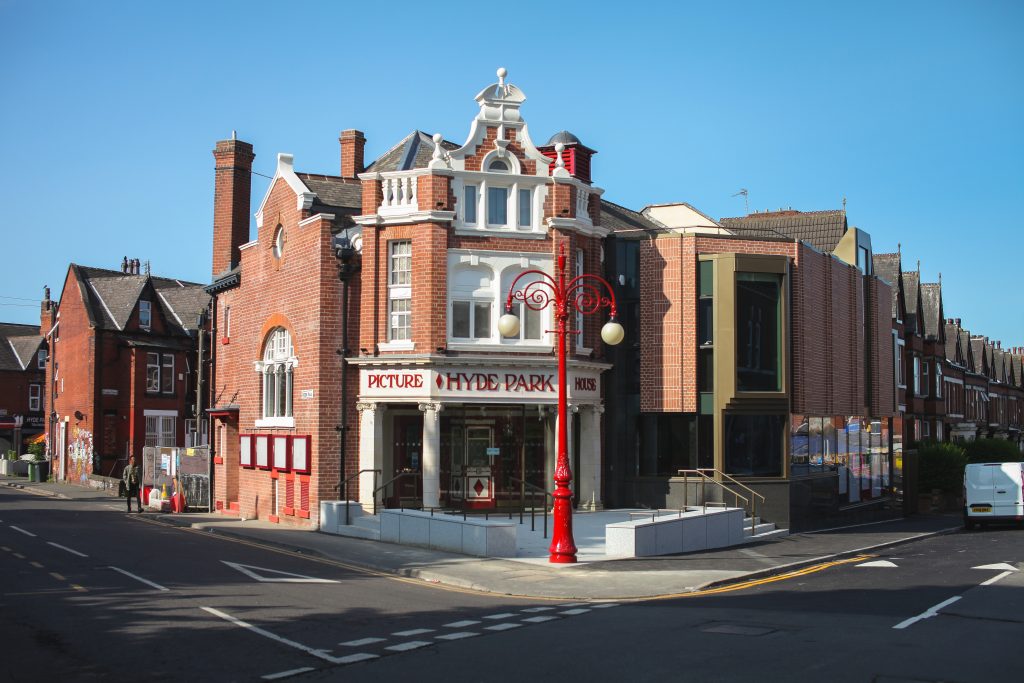
Completed Hyde Park Picture House. Image Credit: Ollie Jenkins.
With growing government concerns about the impact of social media and screen time on young people, cinemas like this offer a monitored, enriching environment that supports wellbeing, communication and shared experience rather than isolation.
Despite their value, both independent cinemas and major chains face real threats. In 2023, Cineworld and Empire Cinemas both went into administration. It’s been reported that The Ultimate Picture Palace in Oxford is at risk of closure after 115 years of operation.
Speaking to the press, actor and producer Leonardo DiCaprio said, “We’re looking at a huge transition. First, documentaries disappeared from cinemas. Now, dramas only get a finite time and people wait to see it on streamers.”
The rise of streaming services began in the early 2000s and surged with Netflix’s launch in 2007. Over time, streaming has reshaped viewing habits, contributed to declining TV licence purchases and reduced cinema attendance. The pandemic accelerated these trends, normalising at‑home premieres and making staying in feel more convenient, comfortable and cost-efficient.
Whilst LIFF Development and Communications Officer Lee Bentham felt this shift has strained an already underfunded industry, Georgina Milner, Ilkley Cinema’s Head of Marketing and Communications, argues the relationship between streamers and cinemas is more “nuanced”.

Ilkley Cinema Exterior. Image Credit: Georgia Milner, Marketing and Programme Manager (Ilkley & Wetherby Cinema).
Ilkley Cinema is thriving by offering unique experiences that cannot be replicated at home; for example, eventised cinema has become a huge cultural phenomenon. With film crazes such as ‘Barbenheimer’ and the recent ‘Wuthering Heightsmania’, there is a renewed incentive for audiences to attend screenings and participate in shared cultural conversations. As Georgiana states, “it is an exciting time to be part of an industry that people so actively engage with.” She also notes that “streaming platforms are eager for awards-season recognition, and to qualify, films must have a commercial theatrical run, leading to generous theatrical windows and closer collaboration between streaming services and cinemas.”
Recently, ‘Peaky Blinders: The Immortal Man’’, according to ‘Deadline’, performed excellently at the UK box office during its opening weekend, selling around 105,000 tickets across only 60 cinemas and 300 screens. While the cinematic release was deemed a success for an independent, limited run, the short release window meant it was primarily a ‘stream-first phenomenon’, with the film amassing more than 25 million views on Netflix.
Streaming hasn’t only affected cinemas financially. It has influenced how we emotionally engage with film. One respondent to our survey commented: “Because people watch movies on the go, we’ve trained ourselves to not react to films.” This suggests that constant, fragmented viewing may be weakening the deeply emotional and communal impact cinema provides.
Despite shifting habits, audiences still value film and cinema. As demonstrated by LIFF, ticket sales took a hit during lockdown but have since recovered, with the festival growing each year and now reaching over 23,000 tickets sold annually. Most people surveyed said they visit the cinema three to four times a year – an occasional treat, but one they clearly still enjoy. As one respondent explained: “Films go beyond entertainment; they can help us understand people and emotions.”
Research supports this: cinema reduces stress, boosts mood and alleviates loneliness. A UCL study found that people’s hearts synchronise while watching a film together, a symbol of how cinema connects us. As Georgiana puts it, “watching a film with others fosters shared laughter, tension, or quiet reflection with friends, family, or a full audience provides comfort and grounding.” Hospital-based screening programmes have shown the powerful impact cinema can have on wellbeing as they boost patients’ mood, improving the emotional and physical impact of being in hospital. “In a busy, stressful world,” Georgiana continues, “going to the cinema allows people to switch off completely and immerse themselves in a story for a couple of hours. Those few hours spent together in a dark room are both meaningful and restorative.”
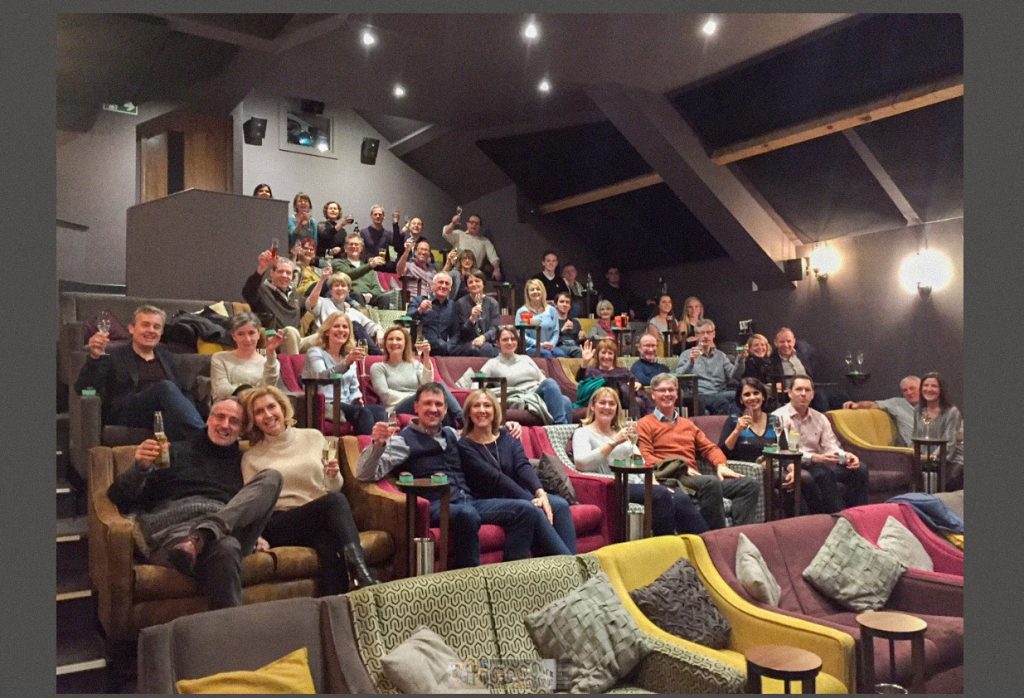
Ilkley Screen 1 Audience. Image Credit: Georgia Milner, Marketing and Programme Manager (Ilkley & Wetherby Cinema).
But how do people decide which cinema to go to?
Survey responses showed that price is the biggest influence, with most people using local independents or Vue cinemas. Currently, chain cinemas typically charge £5–£15, while independent prices vary more. Hyde Park Picture House offers ‘Pay What You Can’ tickets, £6.50 weekday matinees and £10.50 standard showings. Ilkley Cinema is pricier (£13.90 – £14.90) but can offer pre‑ordered food and complimentary drinks, and cake for over‑60s.
There is strong optimism for the UK film industry: there is so much high-end film and TV shot in the UK that the amount of studio space is rivalling Hollywood. Small cinemas are feeling the benefits too. They frequently receive higher per‑screen revenue than large chains, demonstrating their resilience and value within the industry. Memberships, workshops and community events strengthen audience loyalty, transforming cinemas into meaningful cultural spaces rather than simply places to watch films. Yorkshire continues to nurture emerging talent through organisations such as Screen Yorkshire, Screen Alliance North, Leeds Film Festival workshops and The Unit in Bradford. Our local cinemas and film festivals screen work by these new creators, giving them opportunities they might not find elsewhere, exposing them to a film-loving Yorkshire audience. Georgiana highlights that Ilkley Cinema are proud to to showcase local creativity such as ‘The Ceremony’ (2024), an award-winning British indie drama directed by Bradford-born Jack King, filmed in black and white across Bradford and the Yorkshire Dales.
Continued support and awareness of local cinemas is essential to sustaining this community-centred approach, ensuring they remain vibrant hubs within towns and cities. In an era dominated by streaming, these spaces offer something increasingly rare: shared experiences that foster connection, deepen emotional engagement and create lasting memories beyond what can be replicated at home.
***
To keep up to date with the latest information from Hyde Park Picture House, Leeds Film Festival and Ilkley Cinema you can visit their websites and socials.
Filed under: Film
Tagged with: community, film culture, film industry, Hyde Park Picture House, Ilkley Cinema, independent cinema, Leeds International Film Festival, liff, streaming


Comments