
A new chapter for Leeds Playhouse, with Tom Wright, Artistic Director – interview
May 12, 2026
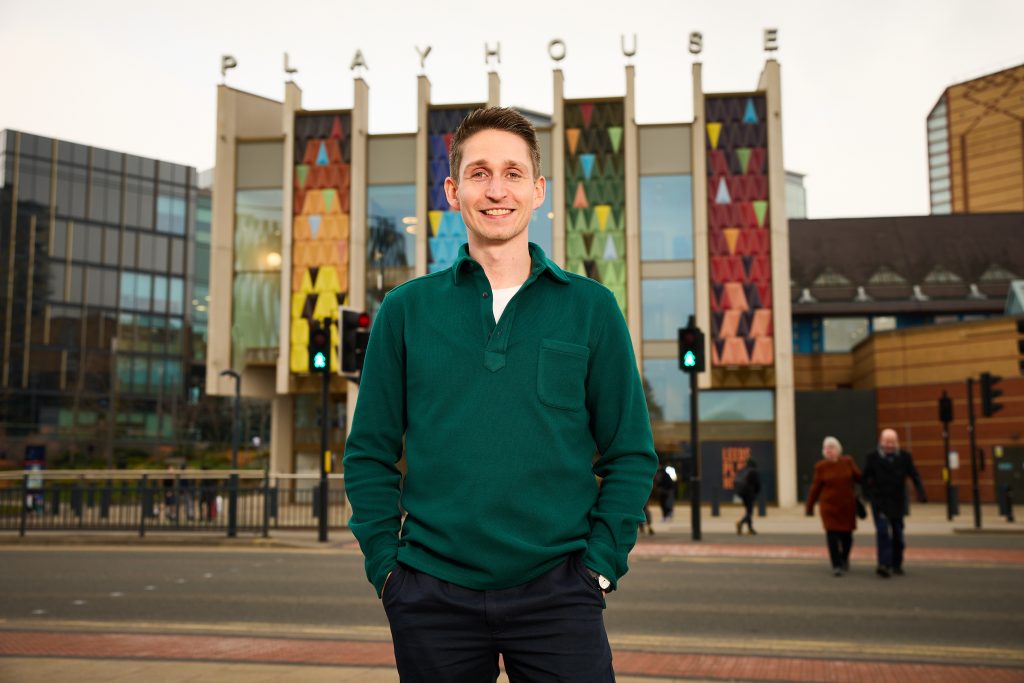
New Artistic Director Tom Wright. Photo by David Lindsay
This month, Leeds Playhouse announced Tom Wright’s first season as Artistic Director, with new productions running from Autumn 2026 to Summer 2027 across the Quarry and Courtyard theatres. From Shakespeare and timeless classics to bold adaptations and new writing, the programme offers a wide-ranging slate of work. We attended the season launch and spoke to Tom about his vision for the theatre.
“I want to support artists to come here and make their best work for the people of Leeds,” explains Tom, who is shaping the Playhouse’s next direction, deciding which productions to stage and which artists to platform, presented at today’s season launch. “If we’re saying we want to represent Leeds, we can’t do that with just one or two shows,” he explains. “We needed to showcase a real range of voices and that’s what pushed us to get the launch over the line.”
This announcement marks a significant milestone. In the current climate, it is increasingly unusual for theatres outside of major national organisations to announce full seasons. Tom attributes this, in part, to the growing need for collaboration. Co-productions allow theatres to share costs and resources, making large-scale work more viable. “There’s a real opportunity there,” he says. “It means more people around the country get to see the work, and from a climate perspective we’re making better use of materials and resources. But it also comes with complications. I might be persuading other theatres to do my ideas, while they want me to do theirs. Then we have to align timelines, schedules and announcement dates.”
The more theatres collaborate, the harder it becomes to present a cohesive season that reflects a single artistic vision. For that reason, Tom says the Playhouse has “fought really hard” to announce a complete season.
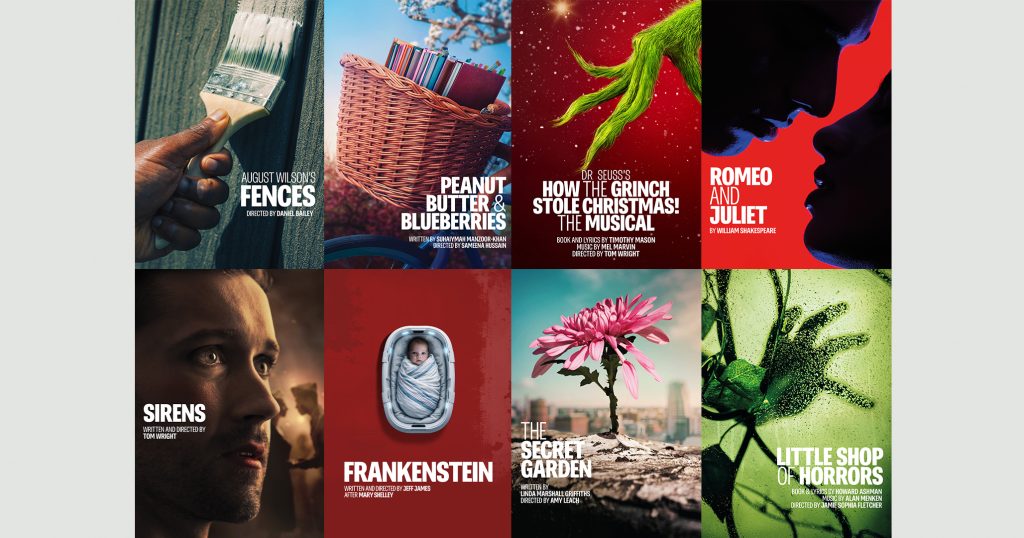
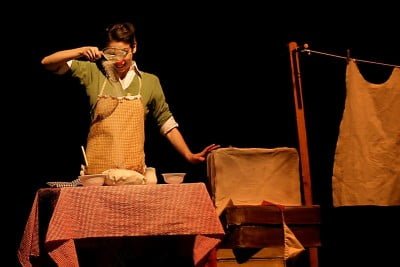
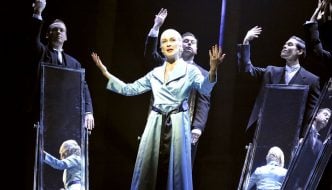
Leeds Playhouse 26/27 Season Shows composite
The programme opens in the Courtyard this September with August Wilson’s ‘Fences’, directed by Daniel Bailey, and concludes in the Quarry with Jamie Sophia Fletcher’s Playhouse debut production of ‘Little Shop of Horrors’. Audiences will be transported from an intense 1950s family drama to an electrifying revival of the cult musical, with its blend of grotesque, comic and camp horror and everything in between.
One of the productions Tom feels best represents this new chapter is ‘Peanut Butter Blueberries’ by Leeds-based writer Suhaiymah Manzoor-Khan. Originally produced at Kiln Theatre, it will be staged at the Playhouse in late August. The play tells a love story sparked by a peanut butter and blueberry sandwich, but shaped by wider social realities and injustices. “I was lucky enough to help develop it in London,” Tom says. “So bringing that play home will be really special.”
As a writer himself, he is particularly passionate about championing new work. “I’m really proud that we’ve got so many new plays in the season… I’ve got a responsibility to give living writers opportunities,” he says. “If we don’t welcome new voices and ideas, we will just stagnate.” To make this possible, the Playhouse must also programme more commercially reliable titles. “If we didn’t do the big shows, we wouldn’t be able to do the new writing, and vice versa.”
One such production is a brand-new UK staging of ‘Dr. Seuss’s How the Grinch Stole Christmas! The Musical’, directed by Tom himself and running throughout December. “To do the first new UK production of that story here in Leeds has real commercial potential,” he says. “It’s got a strong chance of life beyond the Playhouse, which would be brilliant.”
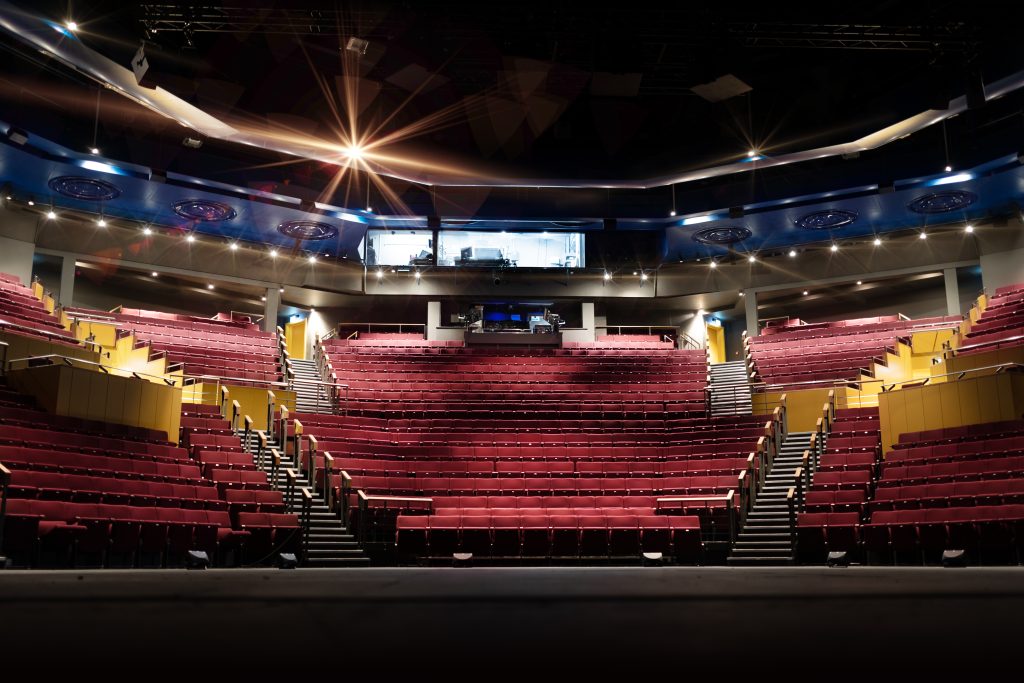
Quarry. Photography by Beata Pejka
When staging well-known titles in the Quarry, Tom emphasises that they must feel fresh and relevant. “We’re really rigorous about reimagining them in new ways,” he says, “so that we stay true to our values: inclusive, progressive and interesting.” Jeff James’ ‘Frankenstein’, opening 12–29 May, is one such example. This new adaptation brings Mary Shelley’s novel into the 21st century, asking whether we are already living in the future she imagined, or whether its horrors are still to come. “Through adaptation, we get the best of both worlds,” Wright says. “A new story from a living writer, but at scale. His script is wild – it’s going to be great.”
Alongside supporting other artists, Tom also appears in the programme as a writer. His play ‘Sirens’ is set in 1942, as enemy bombers darken the skies above London. A group of friends, family and strangers gather in the cellar of an East End pub, seeking shelter as tensions rise and unexpected connections emerge.
Tom began writing the play during the pandemic, drawing inspiration from August Wilson’s cycle of ten plays chronicling the Black American experience across the 20th century. “During lockdown, I had this feeling that history was happening right in front of us,” he says. “At the same time, everything had paused. That got me thinking, what would a queer version of August Wilson’s ten plays look like?”
‘Sirens’ forms part of that imagined cycle, representing the 1940s. Reflecting on the pandemic, he recalls the contrasting responses of those around him. “Some people just wanted their old lives back,” he says. “Others felt like, if this passes, they need to change everything.” That tension is echoed in the production, where characters, trapped together in uncertainty, are forced to confront how they want to live their lives.
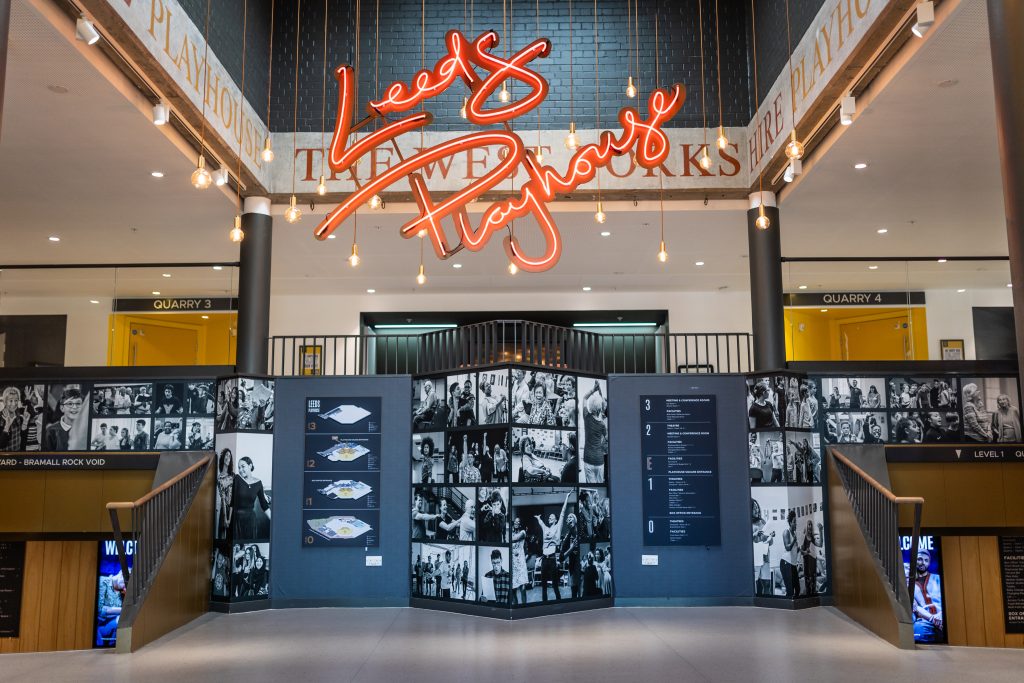
Neon. Photography by Beata Pejka
Leeds Playhouse is more than just a theatre. It is the first Theatre of Sanctuary and a pioneer of dementia-friendly performances. It plays a significant economic role, with a £1 million turnover, around 100 staff, and in-house set and costume production. It’s a space for Leeds. “You walk through the building and see students hanging out, Deaf communities using BSL, and street dancers coming in during the evenings with their boom boxes and dance moves.”
For Tom, this season is about leaning into that side of the Playhouse, which is characterised by range. Range of perspective, range of performance, and range of people coming through its doors. “This building, and Leeds, deserves all of it,” he says. “There’s something here for everyone, but there’s still more to come. Some voices aren’t represented yet, and that’s for future seasons. This is just the start.”
***
For more information about Leeds Playhouse’s upcoming season you can visit their website and keep up to date with the latest shows on their Instagram.
Filed under: Theatre & Dance
Tagged with: leeds playhouse, Leeds. theatre, performance, theatre, Tom Wright
Comments