West Yorkshire Writes: Liz Flanagan on Reclaiming Women’s Stories in the Civil War – Interview
January 28, 2026
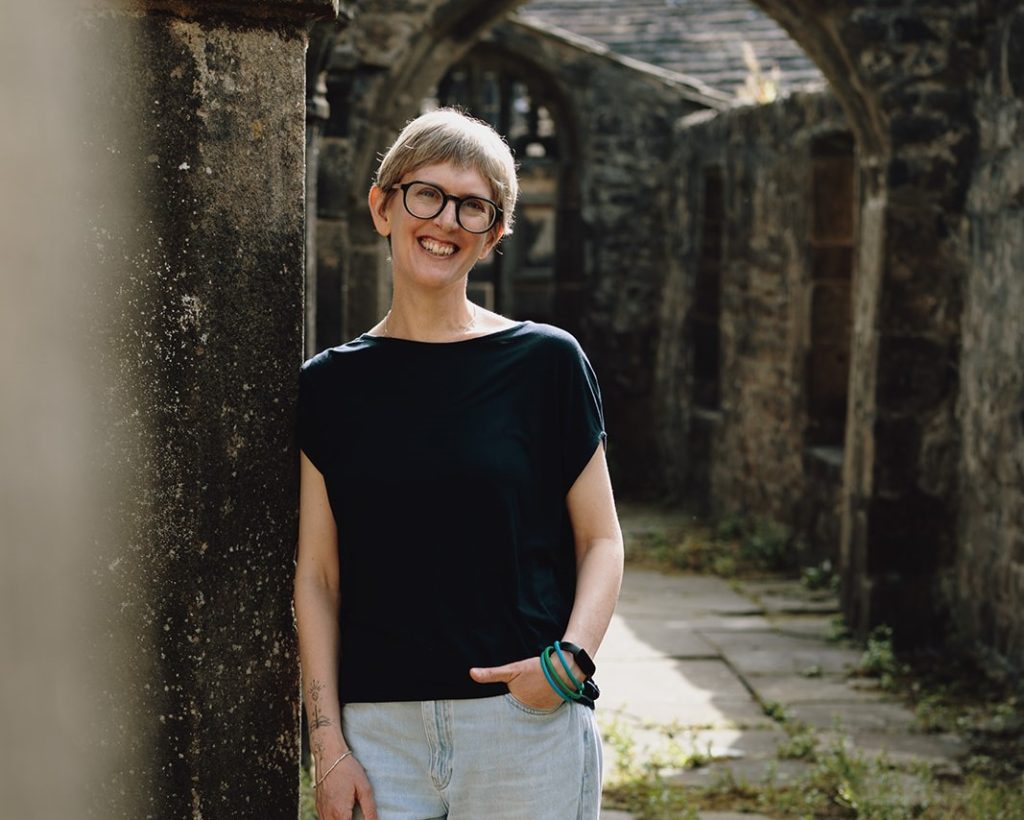
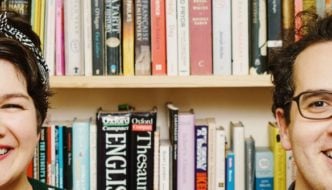
Liz Flanagan. Image Credit: Sarah Mason.
Liz Flanagan is best known for her acclaimed children’s and young adult books, but ‘When We Were Divided’ marks an exciting new chapter in her writing career as she turns her attention to adult fiction for the first time. Set in Yorkshire in 1643, against the backdrop of the English Civil War, the novel follows the lives of Jane, Isabel, and Kit. As conflict spreads across the land, war fractures families, loyalties and identities, with devastating and transformative consequences. Ahead of its release on 12 Feb 2026, Liz spoke with TSOTA as part of our new series spotlighting authors telling stories about the North, its landscapes, and the small towns that make this region such a distinctive and inspiring place.
A creative writing teacher, former book editor and former Centre Director for Arvon at Ted Hughes’s Lumb Bank, Liz lives in Hebden Bridge and is deeply connected to the landscapes and communities of West Yorkshire. That connection runs through her new novel, which is rooted in real locations including Heptonstall, Hebden Bridge, Wakefield and Leeds. Yorkshire, Liz explains, played a crucial role in the Civil War, making it both a personal and historically accurate setting.
The English Civil War is an era Liz describes as “extremely complex,” but one that can be understood in broad terms through its opposing sides. Parliamentarians viewed King Charles I as a tyrant intent on hoarding power, having ruled without Parliament for eleven years under his belief in the divine right of kings. They argued instead for Parliament to play a role in how the country was governed and how money was raised and spent. On the other side were the Royalists, who believed in traditional hierarchy and the authority of the monarchy. “On the whole, the North and the West of England were for the King,” Liz explains, “but around here, especially in little clothing towns, there was more support for Parliament.”
Initially, blending real people, places and events with fictional characters proved challenging, and Liz overwhelmed herself with research for six months. However, an online Arvon course helped her shift focus. “I remember my tutor saying people love historical fiction because of the fiction,” she says. “If readers wanted to learn history, they’d read a history book.” From there, her familiarity with the landscape transformed the daunting task of recreating history into what she describes as “a leap of imagination.” “Rather than getting hung up on facts, I began planning character arcs around the fixed historical points I knew I had to include,” she explains. “I used them as a grid to think about how and why my characters needed to get from A to B.”
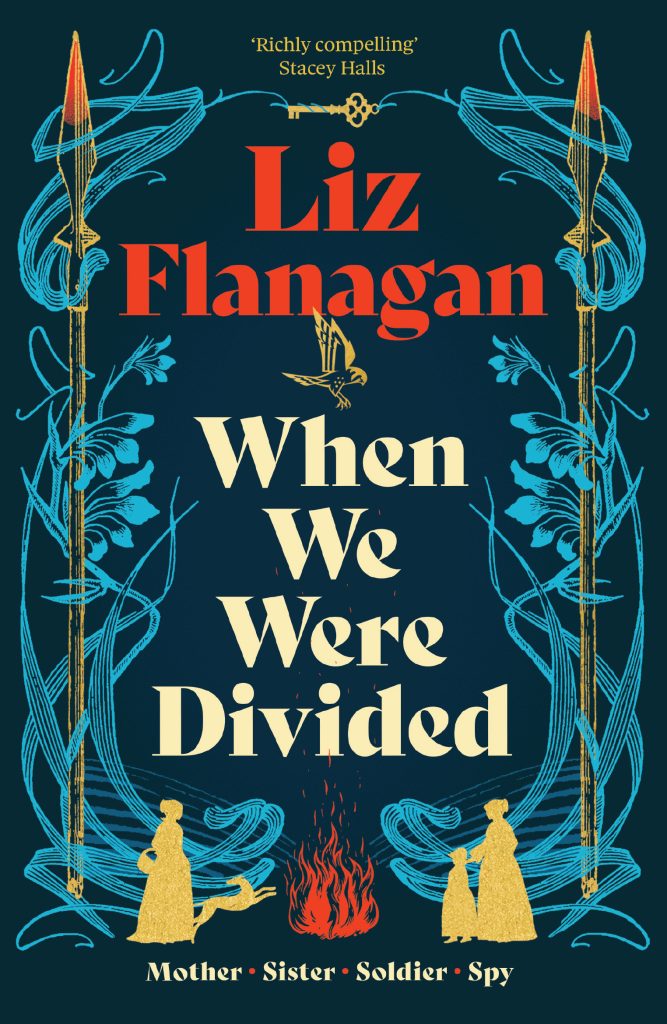
When We Were Divided by Liz Flanagan, Cover. Image Credit: Fox and Ink Books.
The result is a vivid sense of life in the seventeenth century. From the opening prologue, readers are immersed in a world of hardship, starvation and survival as Jane is locked out of the family home and Isabel is quarantined inside while three members of her family die from the plague. Liz explains that beginning the novel this way was essential. “It fractures the sisters immediately,” she says, setting in motion a relationship that deteriorates further as war divides them. “By starting with loss and division, each character can then go on their own journey back towards love and family, which is what I ultimately wanted the story to convey.”
Jane, a devoted mother, begins to unravel when her last surviving son goes to fight for the King. Her sister Isabel, trapped in an unhappy marriage, finds purpose in supporting the Parliamentary cause. Meanwhile, Kit, starving and alone, survives by taking a dead brother’s identity, discovering danger, friendship and love within the King’s army. As Liz notes, “recorded history tends to concern itself with men’s experiences, because historically they’re the ones who made the records.” Drawing on letters and memoirs from the period, she reimagines the Civil War through these three female and non-binary perspectives.
“Women had incredible agency at the time,” Liz explains. “There are documented examples of women dressing as men in order to fight, sometimes for protection, sometimes for economic reasons, just as Kit does.” This does not suggest that female soldiers were widespread, but Liz points out how easily they could go unnoticed. “Soldiers wore huge coats, were grimy, layered up, and wouldn’t be getting changed in front of one another. Even if someone did realise, you might not betray them, if it’s your mate and they’re a good shot, you want them by your side.”
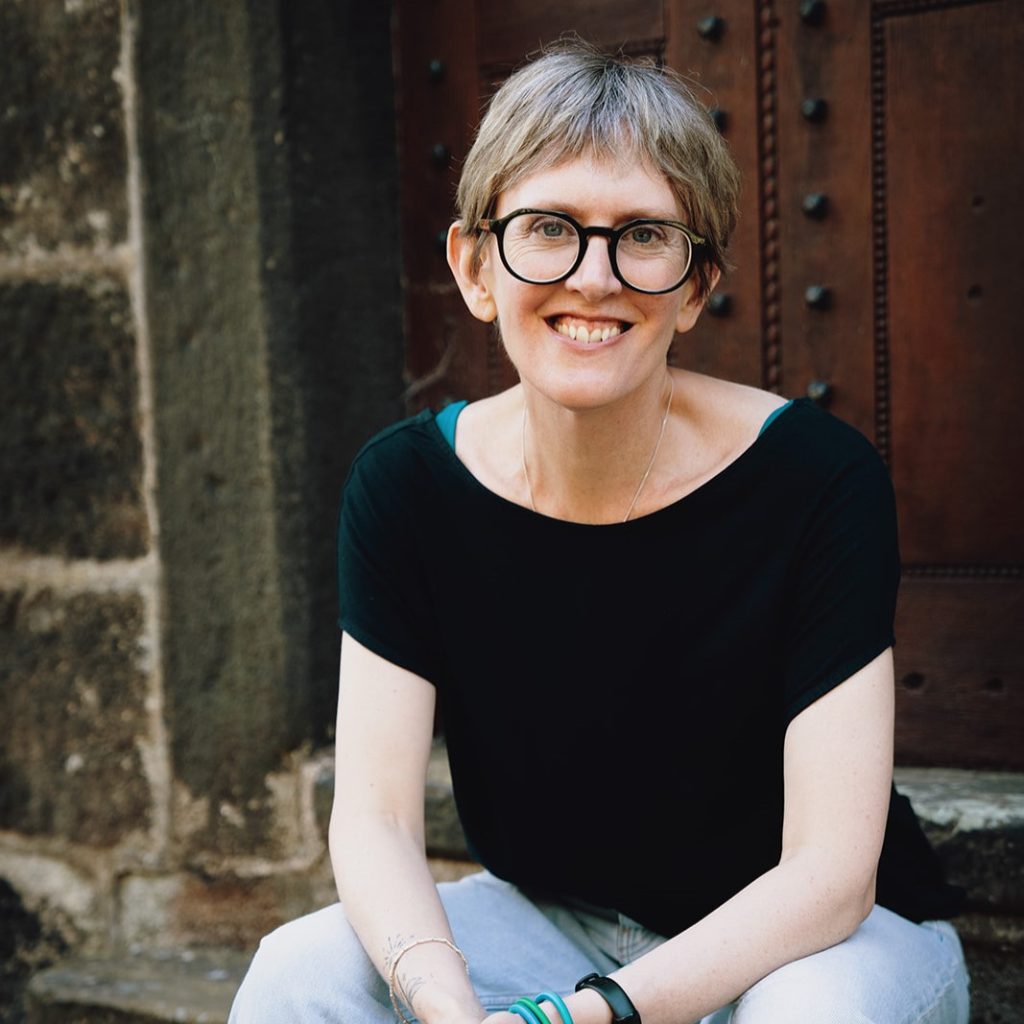
Liz Flanagan. Image Credit: Sarah Mason.
That agency was not confined to working-class women. Liz recounts stories of aristocratic women who led sieges to defend their homes. “There’s an incredible story about Lady Mary Bankes of Corfe Castle,” she says. “She, her daughters, her household and a small group of soldiers defended the castle by pouring things over the battlements and pushing ladders away.” “You can just hear them, can’t you?” Liz adds. “Sassy women echoing down the centuries who refused to stay in the kitchen.” She hopes readers will come away with a sense of kinship with the women of the region, fighting for greater autonomy and recognition centuries ago.”
Alongside reclaiming erased stories of women defending towns, spying and sustaining communities, ‘When We Were Divided’ also explores gender identity in a period that lacked the language we use today. As the mother of a trans non-binary person, Liz felt it was vital to include a positive non-binary character. “Even though it’s dramatised and fictionalised to suit the time, those kinds of experiences have always existed,” she says. “It’s important to create role models throughout history.” Gender, Liz explains, was a significant preoccupation in the seventeenth century, evident in theatre traditions and public life. She points to Queen Henrietta Maria, Charles I’s wife, who referred to herself as “she-majesty generalissima” while travelling abroad to raise funds and arms for the Royalist cause, proudly adopting what was seen as an active, masculine role.
‘When We Were Divided’ captures a time of radical political debate. During moments such as the Putney Debates, some began to question what kind of society might be possible if existing structures were dismantled, including ideas about extending the vote to ordinary men. “I don’t think we are taught just how radical ordinary English people were,” Liz says. “People were beginning to ask why they shouldn’t have the same rights as others, that’s what I’m really interested in.” Through her novel, Liz has written back into the history books some of those strong, empowered and forward-thinking women, while also creating a story about division, fear, and the importance of resisting the urge to let conflict divide us.
***
‘When We Were Divided’ is available to pre-order now from Amazon and Waterstones, and will be released on 12 February 2026. To keep up to date with Liz’s work, you can follow her on Instagram.
You can also join us at Hyde Park Book Club on 17 February, where we’ll be interviewing Liz Flanagan live, with readings from her new novel and a Q&A, as we partner with HPBC to celebrate writers shaping the North.

Comments