
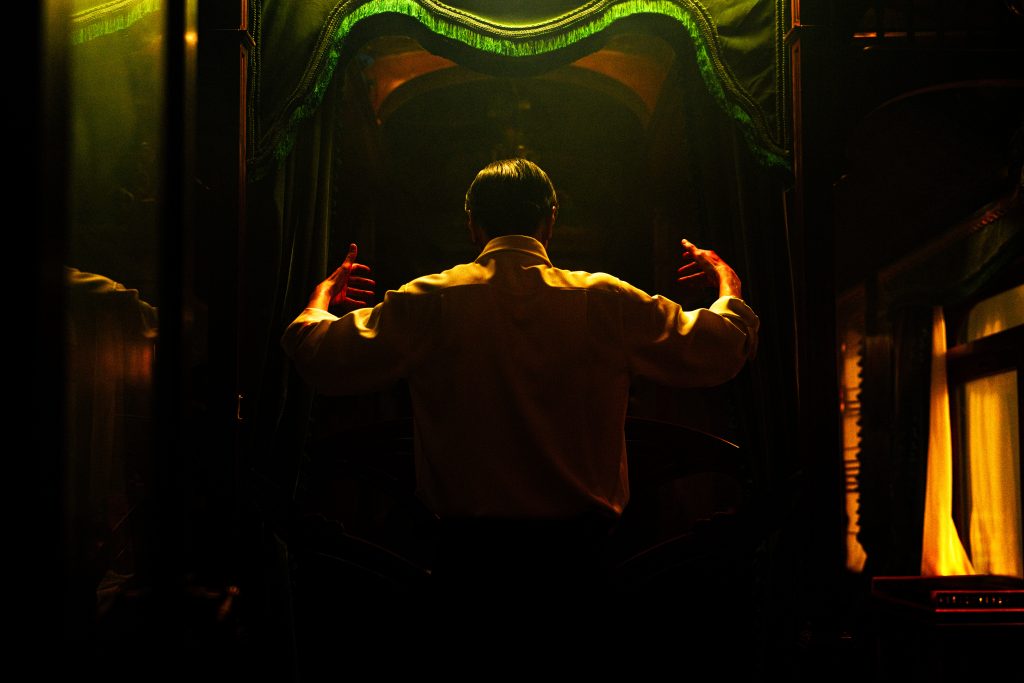
Mark CHAO, Commander in Resurrection. Image Credit: Leeds International Film Festival.
‘Resurrection’, premiered at the Cannes Film Festival in May 2025 and awarded the Special Award, is a bold and hypnotic return from the Chinese director Bi Gan. The film presents a snippet from a future world where humanity has surrendered the ability to dream in exchange for immortality. The drama revolves around a ‘Fantasmer’ — an android corpse which remains exposed to ‘illusions’ and is capable of accessing the dreamworld. A woman, Miss Shu, discovers one of these inhuman creatures, called ‘Deliriant’, and performs a surgical procedure on him to traverse his visions and inhabit his inner world.
Bi Gan’s ‘Resurrection’ builds a suite of five chapters keyed to the awakening senses of the creature: sight, hearing, taste, smell, touch, and a sixth one to the ‘mind’. As the Fantasmer shapeshifts through different forms in the film, Gan plays with cinema as a form of consciousness. Each of the episodes operates in a different cinematic style, incorporating elements from various eras and generations.
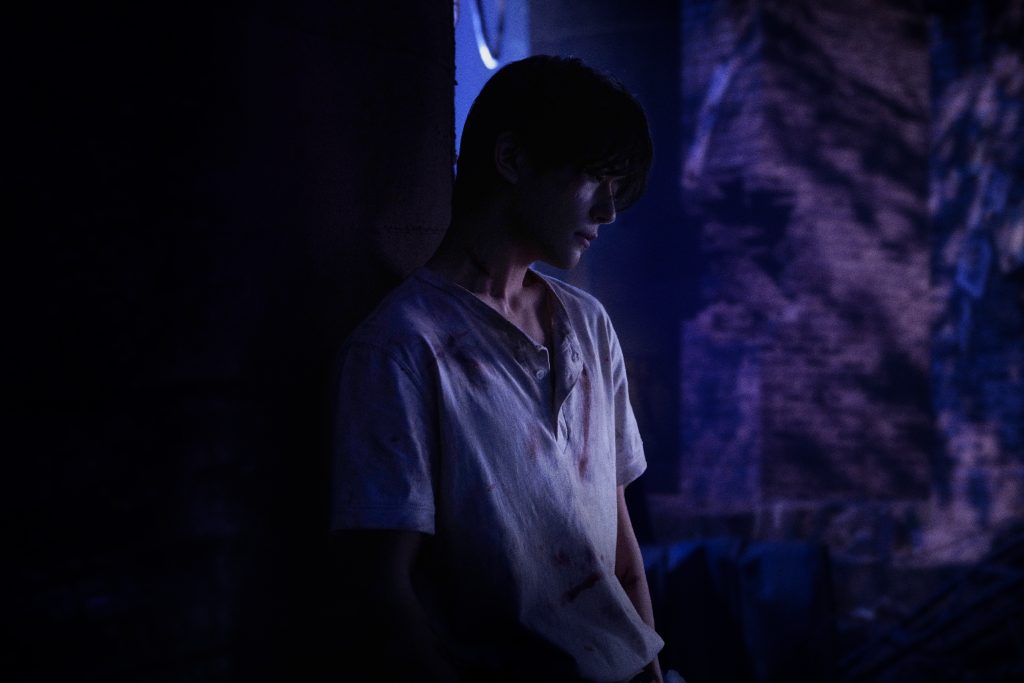
Jackson YEE in Resurrection. Image Credit: Leeds International Film Festival.
The first twenty minutes of the film are completely silent, feeling disjointed at first. However, once it is established as simply the first of Gan’s intended chapters, a homage to silent-era films and German Expressionist staging, it anchors the initial motif of ‘vision’. In this episode, Miss Shu equips the damaged android with a projector where the heart would be, reviving him and bringing his sensations to life. The irony is undebatable here — she enters the creature’s dreams through the very medium we’re watching.
As we move through the different ways Gan expresses dissonance in ‘Resurrection’, the Fantasmer’s journey traverses eras of twentieth-century film history: a WWII-era noir murder tied to sound; a mythic fable of taste in a Buddhist temple; a con-artist vignette centred on smell; and a single-take vampire romance evoking touch. The gliding transitions accompanied by the narrator’s comments in a serene, slow-paced voice leave the viewer drifting between sets. Yet, a consistent colour palette in each, rhyming camera moves and haunting, dreamlike music tie the chapters together.
In the penultimate chapter, Miss Shu leaves the timeless limbo and performs a baptismal ritual with Deliriant, which serves to transition the film into the finale the ‘mind’ section. Miss Shu only appears in the first and penultimate chapters, and yet, with limited screentime, her performance is remarkable. She ranges from hopeful at the beginning to solemn and compliant at the end, when she submits to the ambiguous water-immersion ritual that closes the creature’s arc.
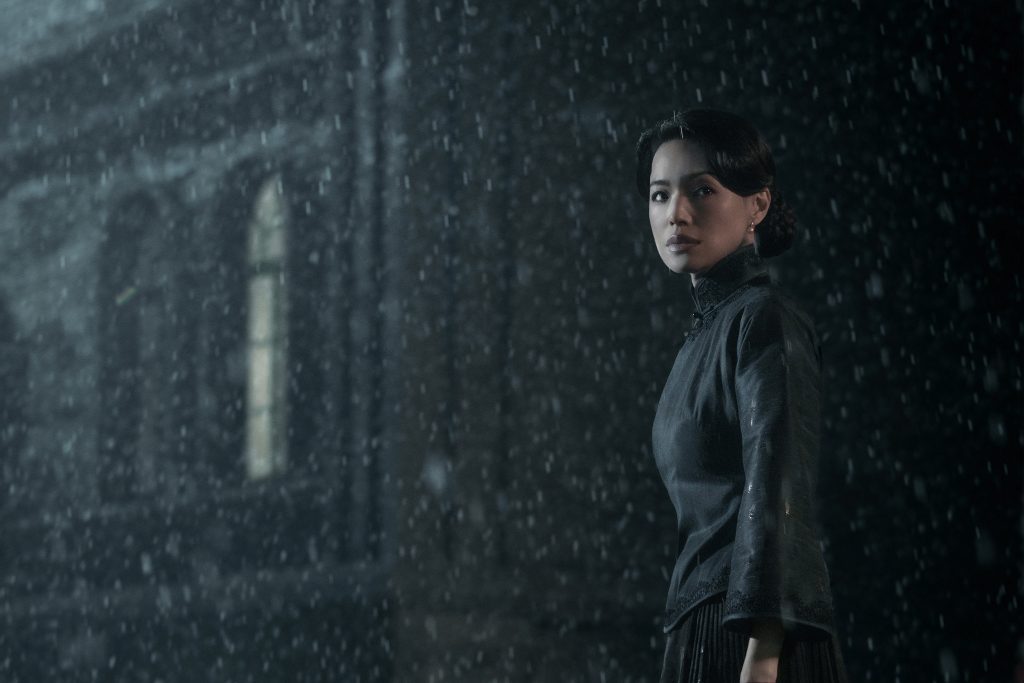
SHU Qi in Resurrection. Image Credit: Leeds International Film Festival.
The last shot in the final episode takes us to a baroque theatre, where we see the audience watching a scene marked ‘THE END’. After exploring the five senses, the final chapter brings us back to the foundation of the film, reconstructing a place where dreams are created: the cinema itself. All the boundaries between Miss Shu’s dream, the android and the audience collapse, immersing us entirely into the film through meta-cinema.
‘Resurrection’ feels like a fever dream at times, and perhaps that’s the point. As the glowing, faceless audience slowly disappears, the auditorium dissolves, and the screen fades, it echoes the initial lifelessness of the android without a projector in his chest. Therefore, Gan’s resurrection of a creature through the history of cinematography calls for the resurrection of cinema as a whole. Just as minds exist only when someone attends to and feels them, films exist only when viewers watch them.
***
Filed under: Film, Film, TV & Tech
Tagged with: cinema industry, cinematograoht, film, film culture, film event, film festival, International film, Leeds film festival, Leeds International Film Festival, liff, Resurrection


Comments