All About Me: On the Personal Essay and Narrative Non-Fiction at Leeds Lit Fest 2026 – Comment
Leeds Lit Fest poster. Image Credit: Leeds Lit Fest.
Liam Bishop is a writer from Leeds, who has appeared in the Irish Times, the Times Literary Supplement, TOLKA magazine, and many others. He is also a host on the podcast, the Rippling Pages: Interviews With Writers. Next week, as part of Leeds Lit Fest 2026, he will record a special live edition of the show with writer and lecturer Alice Hattrick to discuss their forthcoming book , ‘Fancy Work’. Ahead of the event, he reflects on the enduring appeal of the personal essay and shares some of his favourite examples from recent years.
The ‘personal essay’ hasn’t always been the easiest genre to categorise, but the idea of what it can be has expanded in recent times under the broader banner of narrative non-fiction. As a writer and editor, as well as teaching it at the Faber Academy, Marina Benjamin stated that, “much of the skill involved in making a personal essay come alive on the page is to stay close to the ground, making sure that all the internalised reflection is externalised as (for lack of a better word) plot’. I interpret Benjamin to mean that, in the personal essay, narrative and stylistic choices take precedence as much as the representation of fact and reality. The structures of more traditional reportage or memoir cannot always offer avenues to reaching those truths or, as Benjamin writes, get “close enough to the ground”. And, in some instances, neither can fiction.
Some might claim this sounds a little like ‘auto-fiction’, where fictional elements are built around autobiographical narrative, and the boundaries between fiction and non-fiction are subsequently blurred. These boundaries have never concerned me too much, but we certainly see them being tested more and more in the personal essay. When I’m reading and differentiating between narrative non-fiction, the personal essay and fiction, I try to identify whether there is a desire to purposefully obscure and fictionalise reality as opposed to trying to narrate it in a way that reflects a ‘truth’ about the writer’s embodied experience. Here are some of my favourites that I think do just that.
1) Ill Feelings by Alice Hattrick (2021: Fitzcarraldo Editions)
Hattrick’s book was, notably, a winner of the Fitzcarraldo Essay Prize, a prize for writers that is given to those who can ‘expand the essay form’. Hattrick, almost seamlessly, switches between different styles of non-fiction writing. The book is about chronic fatigue syndrome (CFS)/myalgic encephalomyelitis (ME), a diagnosis Alice shares with their mother. A condition that is notoriously difficult to treat and diagnose, Alice weaves (auto)biography, science art history, reportage, and polemic to explore the effects the diagnosis has had on theirs and their mother’s lives. ‘Ill Feelings’ is a fine example of how you can balance different styles around a personal narrative. When I’m trying to write and structure my own personal essays, it’s a book I find myself often coming back to for inspiration and guidance.
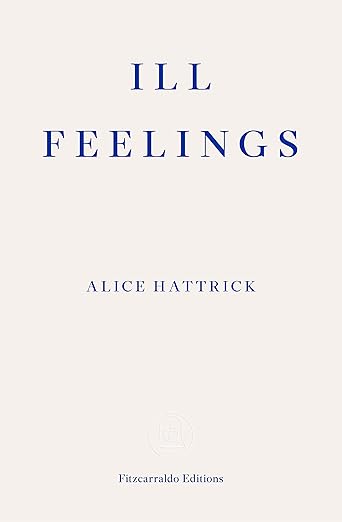
Ill Feelings by Alice Hattrick (2021: Fitzcarraldo Editions). Image Credit: Fitzcarraldo Editions.
2) Fair: The Life-Art of Translation by Jen Calleja (2025: Prototype Books)
“[A]s my partner recently pointed out,” Calleja said in an interview for London Magazine, “in actual fact all my books up to this point have in a sense been experimental forms of memoir, so I’ve been at it for years… everything I’ve ever written has been an experimental memoir, even my book reviews, even my translations.” From her theory of ‘goblinhood’ and embracing our inner goblins in ‘Goblinhood: Goblin as a Mode’, which featured essays and poetry (and a good amount of David Bowie’s ‘Labyrinth’), to her prose-poem, ‘Vehicle’, experimentation and reinvention of form is Calleja’s modus operandi. ‘Fair’ is no less experimental. On the face of it, the book is about literary translation (Calleja translates German and edits for Praspar Press, a translator of Maltese literature). The book is set, as the title indicates, in a fictional fun fair, where the stalls and rides represent real-world challenges Calleja has had to navigate in her life as a translator. ‘Fair’ manages to be both playful and deeply personal as we see Calleja’s passion for this vital art form coming up against being underpaid, undervalued, and undermined.
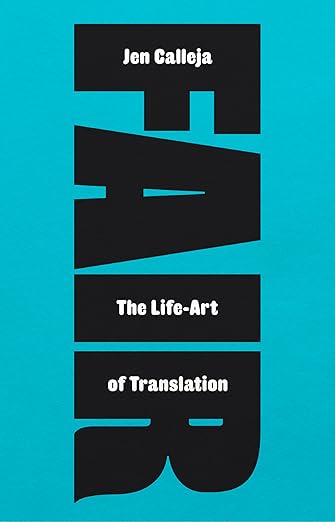
‘Fair: The Life-Art of Translation’ by Jen Calleja (2025: Prototype Books). Image Credit: Prototype Books.
3) An Army of Lovers Cannot Fail by Hélène Giannecchini (2026: translated by Anna Moschovakis, Fitzcarraldo Editions)
Giannecchini grew up telling people that she had three parents: her mother fell in love and then fell in love again. Refusing to choose between the men, Giannecchini tells us that neither of them wanted to leave either, so they “invented a new way of living”. Giannecchini uses this as a basis to explore relationships in her own life and critique the notion of ‘family narratives’. She attempts to develop a ‘genealogy of queer ancestors’ to contextualise her own life and relationships. She explores topics such as the AIDS crisis, Casa Susanna, and the life and work of photographer Donna Gottschalk. Indeed, it was through an exhibition of Gottschalk’s work at The Photographer’s Gallery in Soho that I was first introduced to her work. Giannecchini had curated the exhibition. Alongside Gottschalk’s photographs of her ‘chosen family’ of friends, lovers, siblings and fellow activists of the gay and trans movements, were passages from Giannecchini’s book. It only seemed to bring into more vivid focus the story Giannecchini was trying to tell.
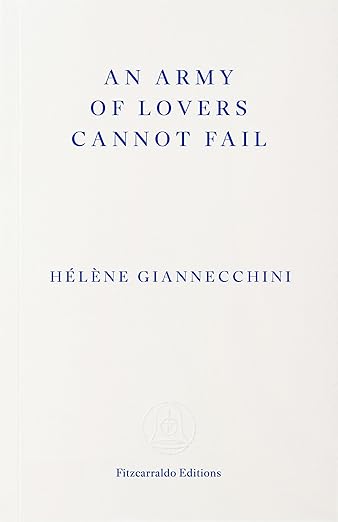
‘An Army of Lovers Cannot Fail’ by Hélène Giannecchini (2026: translated by Anna Moschovakis, Fitzcarraldo Editions). Image Credit: Fitzcarraldo Editions.
4) A Flat Place by Noreen Masud (2024: Hamish Hamilton)
Noreen Masud frames her book around memories of her childhood in Lahore, Pakistan. She remembers being dropped off at school, and when she reached a certain point on her journey, she’d look out of the window and see the busy suburbs in which she lived, make way for huge empty fields. The memories of these fields inspire her to visit and write about other ‘flat places’ in the United Kingdom, where she now lives and works. From Morecambe, to Newcastle, to Orkney, Masud’s fascination with flat places unravels to become a deeply personal exploration of trauma. All the while, Masud’s voice is lively and hopeful. The flat places, she writes in the introduction, have given her a way to love herself.
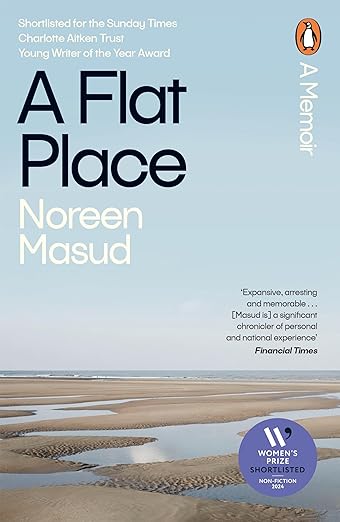
‘A Flat Place’ by Noreen Masud (2024: Hamish Hamilton). Image Credit: Hamish Hamilton.
5) Swimming Studies by Leanne Shapton (2025: Daunt Books)
Shapton was once ranked 8th in Canada at the 100 metre breaststroke. She was also a trialist for the Canadian Olympic team on two occasions. Now an artist, novelist, and editor at the New York Review of Books, one might be tempted to draw parallels between artistic and sporting obsessions. For sure, I enjoyed reading about Shapton’s meticulous and obsessional approach to swimming. The book, however, reads nothing like your conventional sporting memoir (although it features a fair amount of sport). Instead, I enjoyed ‘Swimming Studies’ for how Shapton speaks about the embodied nature of reality, and how we move and exist in space and time as physical beings. Talking of physicality, the book is also a reminder of the importance of the book as an object; it features Shapton’s photographs and paintings of swimming pools (Shapton notably recounts swimming in Leeds International Swimming Pool) and other swimmers. In any case, this re-edition (it was originally published in 2012) by Daunt Books last year is a beautiful edition and a worthy inclusion.
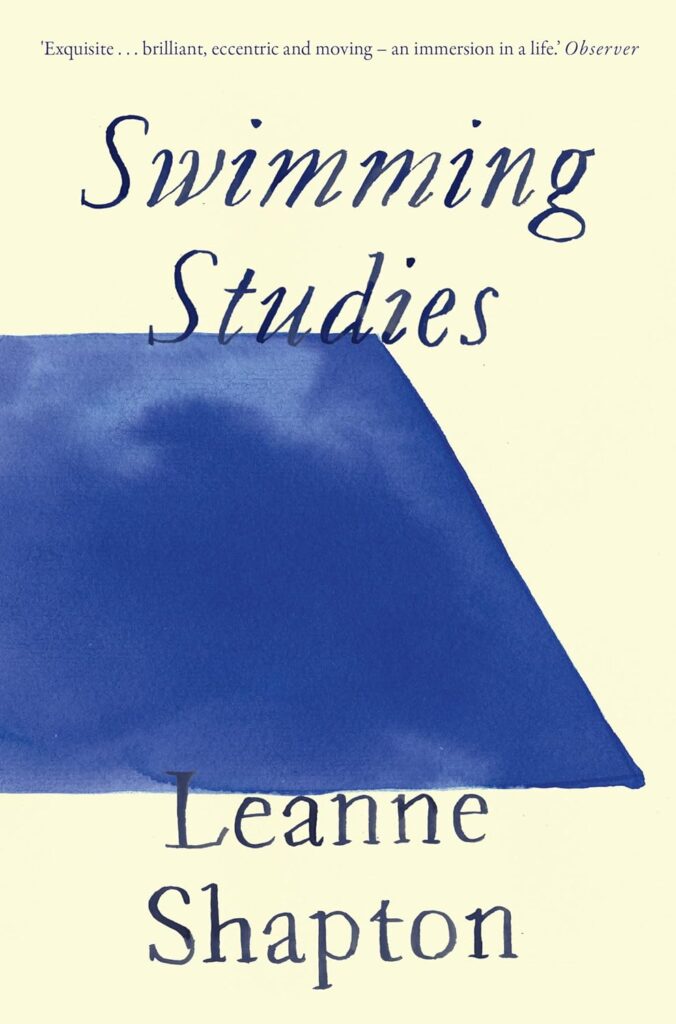
‘Swimming Studies’ by Leanne Shapton (2025: Daunt Books). Image Credit: Daunt Books.
6) Bonus: We Were There by Lanre Bakare (2025: Bodley Head)
Okay: Bradford-born Guardian journalist Bakare’s book admittedly doesn’t fall into the personal essay territory. I was, however, riveted by his approach to narrating Black British identity that exists beyond London; because it’s Leeds Literature Festival, this felt like a fitting book to highlight.
Bakare writes about Leeds and other Northern towns and cities in his aim to tell a story about Britain that is often misremembered, overlooked, or suppressed. He opens the book with a story about Chapeltown-born, Steve Caesar, a migrant from St. Kitts who won a Northern Soul dance competition. Bakare noticed him in the background of Tony Palmer’s film about the iconic Wigan Casino, ‘Northern Soul’ (1977). Caesar was standing alongside a small number of other Black people in a casino full of predominantly white working-class people (traditionally, Northern Soul, is a story about white working-class young people listening to Black working-class American music). Stories like Caesar’s and many others constitute this compelling and essential book.
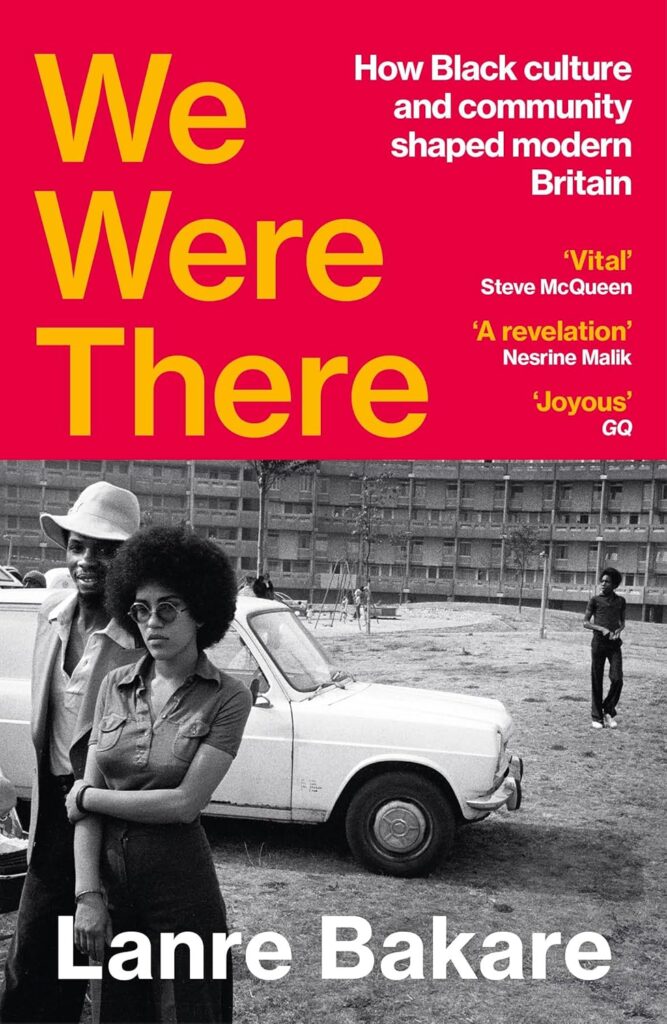
We Were There by Lanre Bakare (2025: Bodley Head). Image Credit: Bodley Head.
***
Liam will be in conversation with Alice Hattrick at Hyde Park Book Club on Sunday 14 June 2026 1:30 pm – 3:00 pm. You can still buy tickets here.
For more information and to buy tickets for events at Leeds Lit Fest 2026 you can visit their website and Instagram.



Comments