
Competition Films at LIFF 2025: Love, Desire and the Self in ‘The Follies’ and ‘Fantasy’

Follies (Berenice Vincent – Totem). Image Credit: Leeds International Film Festival.
‘The Follies’, an honest and sharply funny dive into the messiness of modern love, sex and long-term partnership, marks the feature debut of Canadian screenwriter and actor Eric K. Boulianne. It follows François, played by Bouliane himself, and Julie (Catherine Chabot), married 16 years with two children, as they decide to have an open relationship in the hopes of reigniting desire and saving a love that has grown gradually passionless.
The film opens at a dinner party with a younger couple, where the camera lingers on the tiny looks François and Julie exchange. Full conversations played out silently across the table. They seem content, relaxed in the way only decades of shared life allow — until an awkward question about non-monogamy questions everything they thought they had settled.
Back home, contentment no longer feels like enough. In a quietly devastating moment, François confesses that while he feels loved by Julie, he no longer feels desired. Their decision to “give it a try” leads to a set of ground rules, and a plunge into apps, dates and swinging socials.
Initially, François charges farcically forward while Julie excuses herself to sit awkwardly in the corner and watch him have sex with strangers. But the real irony lands when Julie unexpectedly falls for a couple she caters for, discovering a belonging and sensuality she has forgotten she was capable of. Meanwhile François, despite his bravado, finds only loneliness in pleasure without connection.
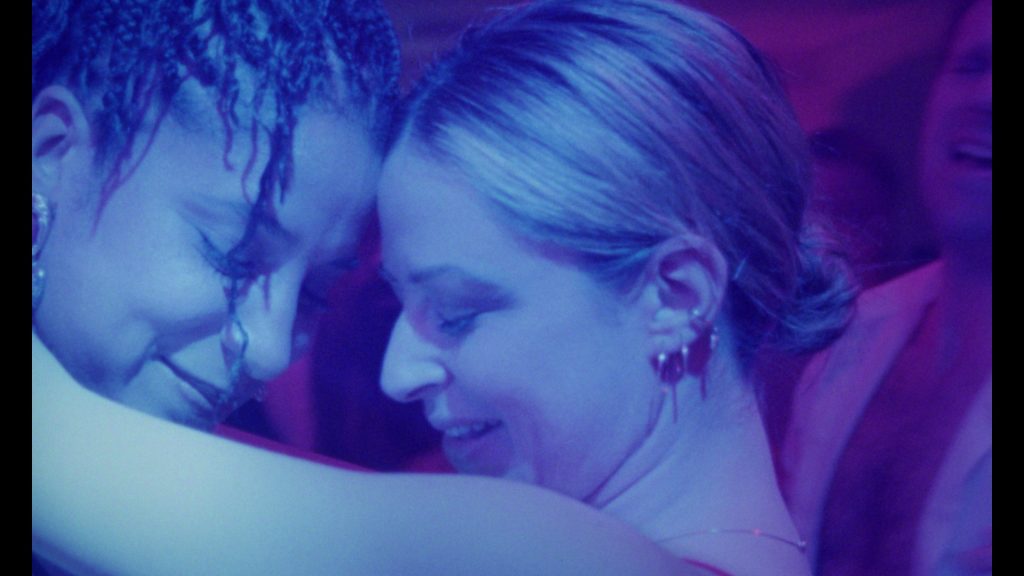
Follies (Berenice Vincent – Totem). Image Credit: Leeds International Film Festival.
The performances are the film’s anchor — funny, tender, and emotionally generous. The chemistry between the leads makes the struggle believable, and their physical comedy keeps the story grounded rather than ridiculous. ‘The Follies’ emerges as a sex-positive comedy with real heart, balancing farce and warmth to explore the complicated ways love evolves over time. It is a film about the people we meet who reshape us, about losing love and rediscovering it, and about how the human heart can expand, sometimes unexpectedly, to hold more than one person.
If ‘The Follies’ explores desire as something negotiated within a long-established partnership, ‘Fantasy’ — the debut feature from Slovenian-Macedonian filmmaker and musician Kukla — shifts the focus to a younger stage of life. Where ‘The Follies’ is about preserving desire, ‘Fantasy’ explores what happens when desire changes how young women see themselves and their future.
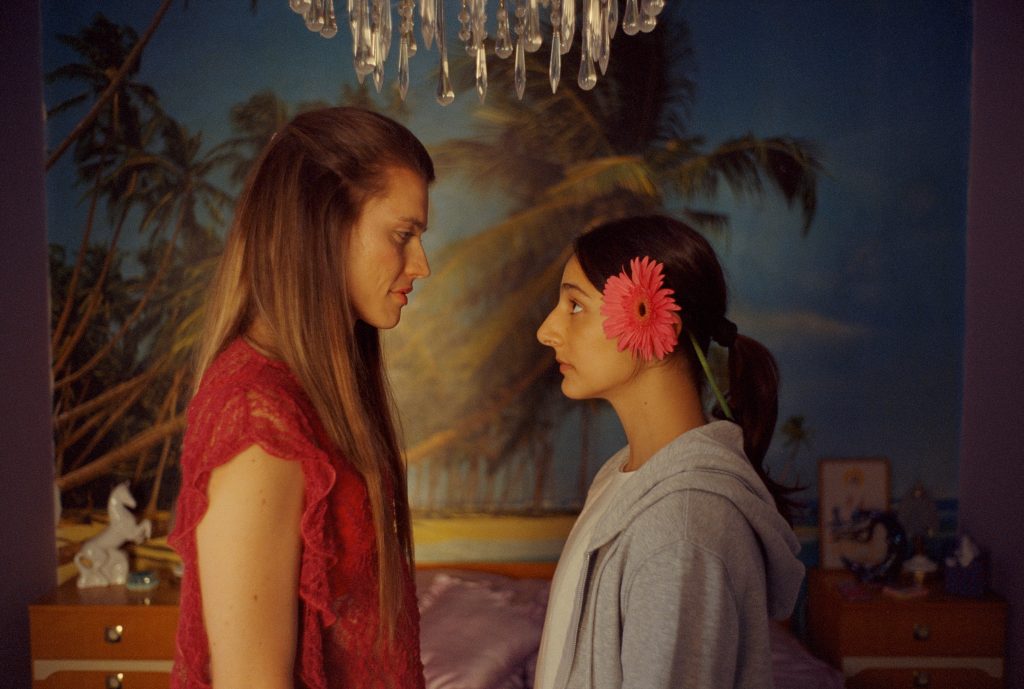
FANTASY – Berenice VINCENT (TOTEM). Image Credit: Leeds International Film Festival.
The film follows three tomboyish friends in their early twenties, Sina (Mina Milovanović), Mihrije (Sarah Al Saleh), and Jasna (Mia Skrbinac), navigating life in a Slovenian neighborhood where family, men and authority figures force them to hate their femininity because only sons are accepted in their fathers eyes in a very patriarchal society. Their tight dynamic begins to shift with the arrival of Fantasy (Alina Juhart), a young transgender woman whose enigmatic presence is underscored by Kulka’s bold visual storytelling and dynamic use of music.
Fantasy enters the film in saturated colour. The unapologetic pink of her clothes contrasts with the grey tracksuits of the trio as they sit eating ice cream — their small cones dwarfed by her elaborate sundae. Her apartment too is an explosion of colour, pattern and flowers: an environment that makes the others visibly uncomfortable and impossibly fascinated at the same time.
Glittering, shimmering sounds punctuate the moody electronic score whenever Fantasy appears. In their dull and masculine world, Fantasy is a sonic burst of warmth and vibrancy.
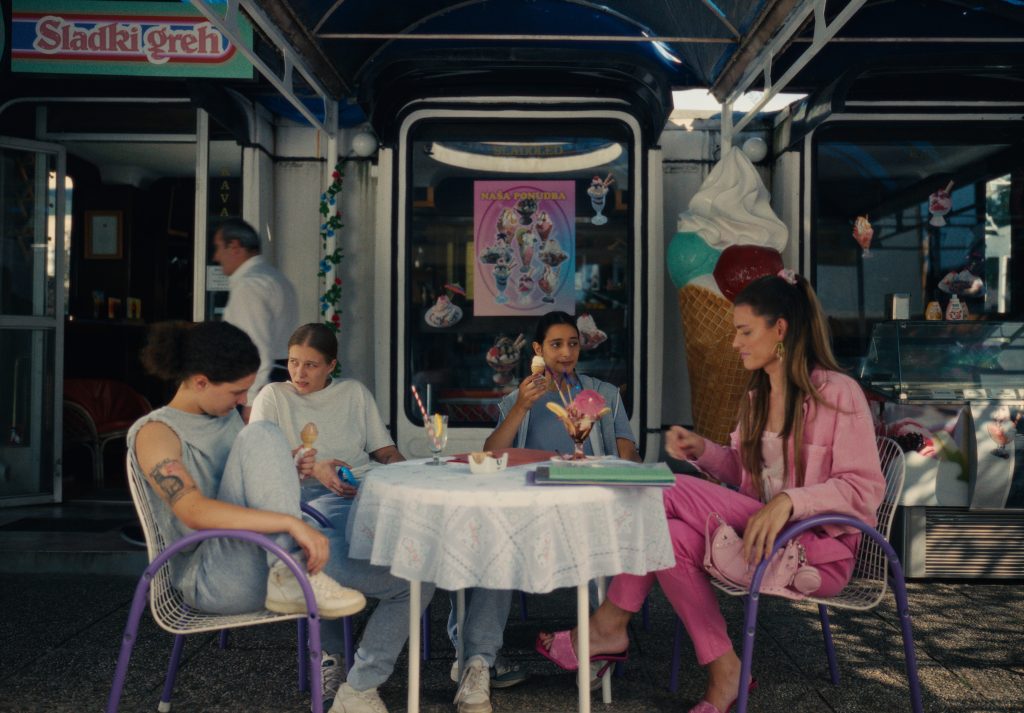
FANTASY – Berenice VINCENT (TOTEM). Image Credit: Leeds International Film Festival.
Gradually, Fantasy influences them all. Although initially cynical about romance, Sina enters a relationship with her boxing coach. Jasna, suffocated by her discontented mother, begins to dream of escape from Slovenia altogether. Mihrije, the most captivated by Fantasy, lets Fantasy give her a makeover — swapping tracksuits for glitter and a vibrant dress — and later flees with Fantasy to Macedonia to escape an arranged marriage.
While Fantasy is not the protagonist in a conventional sense, she is the catalyst for everything: she shows the trio that even in the biggest concrete prison, freedom begins with the refusal to apologise for who you are. Consequently, each woman takes tentative steps into adulthood, forging paths that diverge from the futures they once imagined.
Taken together, ‘The Follies’ and ‘Fantasy’ form a compelling cinematic dialogue. One tests how far love can stretch without snapping; the other shows what is possible when you stop contorting yourself to fit a life you never chose. Both suggest that intimacy, whether monogamous, polyamorous, queer or undefined, is an ongoing negotiation between who we are and who we might yet dare to become.
***
Filed under: Film
Tagged with: desire, Everyman Leeds, film, film culture, film review, International film, Leeds film festival, Leeds International Film Festival, liff, romance


Comments